
Complete Guide to Choosing UFO LED High Bays for Industrial Warehouses: Wattage, Height, and Chip


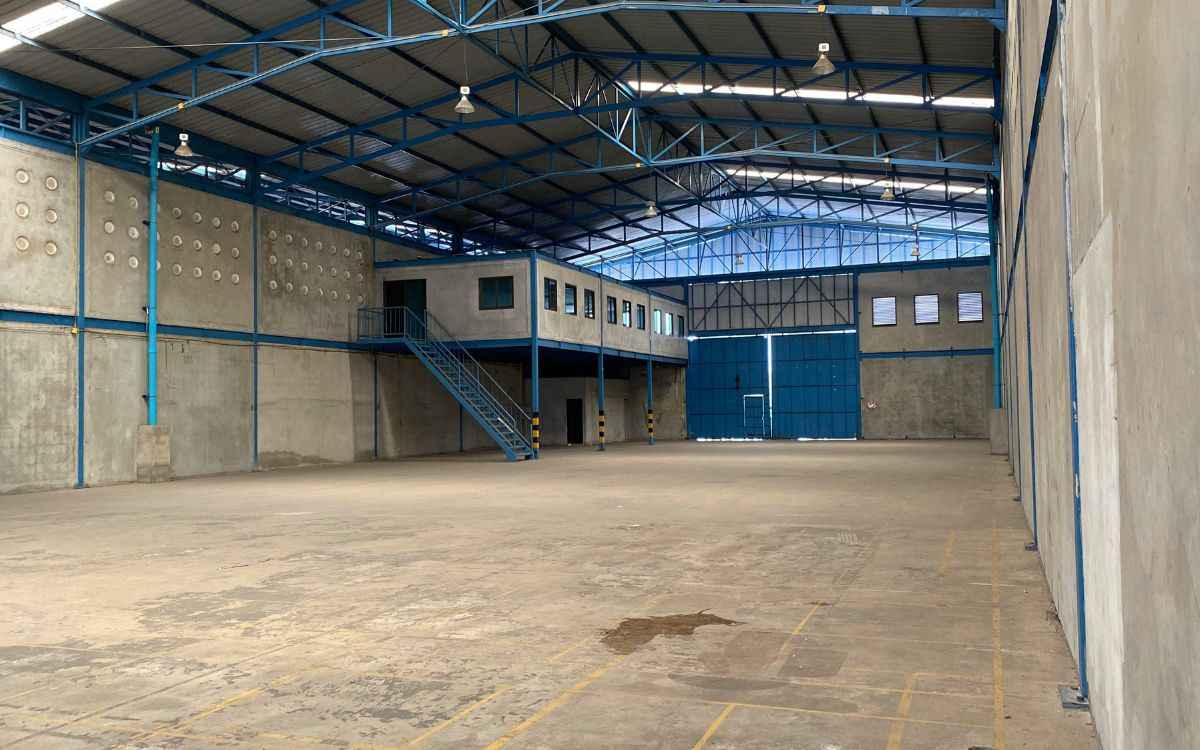
The plant manager of an automotive components manufacturer in Valladolid had not touched the warehouse lighting for five years. He had 120 400W metal halide high bays that took 15 minutes to start up and failed once or twice a month. The maintenance electrician spent more time up a ladder than doing his actual job. They installed 120 150W industrial UFO LED high bays with a Samsung chip and a dimmable driver.

On the first day, the plant manager noticed something he had not expected: the warehouse seemed larger. The faults disappeared. The electricity bill fell by 63%.

That is what a good high bay choice can deliver. It can also go wrong: insufficient wattage for the installation height, an unspecified chip, a driver that fails after two years. This warehouse LED high bay selection guide is designed to prevent the second scenario.

What a UFO LED high bay is and why it dominates the industry

A UFO LED high bay is a compact circular highbay luminaire designed to hang from high industrial ceilings. The name comes from its profile viewed from below: a flat disc with a perimeter heat-dissipation fin. It replaces the old high-voltage discharge high bays, sodium vapour and metal halide, in most new or refurbished installations.

Its market share in new industrial warehouses already exceeds 80% in Europe. It is not a trend: there are specific technical reasons behind it.

Why the UFO format outperforms traditional high bays

Discharge high bays need a starter, a ballast, and a warm-up time that reaches 15 minutes for metal halide. If there is a power cut, it starts all over again. LED lights instantly, without oscillation, without a stabilisation period.

The UFO format concentrates the heat sink and driver in a compact body weighing between 3 and 6 kg depending on wattage. That simplifies installation, reduces the load point on the structure, and makes maintenance easier. It also withstands vibration better than long-bodied high bays, which matters in warehouses with heavy machinery.

Real efficiency: up to 200lm/W in the best models

Luminous efficiency is the figure that most distinguishes serious manufacturers from the rest. A 200 lm/W high-efficiency UFO LED high bay delivers twice as much light per watt as a standard sodium vapour high bay and more than three times as much as an incandescent.

In practice, a 150W high bay at 200 lm/W produces 30,000 lumens. To achieve the same with metal halide you need 400W. That difference is what drives the ROI.

Mid-range models sit between 150 and 180 lm/W. Below 130 lm/W, the high bay does not justify its price against other alternatives.

How to choose the wattage based on your warehouse ceiling height

Recommended wattage for a given height is the variable that generates the most errors in project planning. An undersized high bay leaves dark areas even when the number of luminaires is correct. An oversized one wastes energy and can cause direct glare.

The table below provides guidance for warehouses with a clear height between 4 and 14 metres, assuming average floor and wall reflectance, a spacing between high bays of 4 to 6 metres, and a target illuminance of 200-300 lux. These are reference values: a real project requires a photometric calculation using specific software.

Clear ceiling height Recommended wattage Indicative minimum output Max. spacing between points
4 – 6 m 80W – 100W 12,000 – 16,000 lm 4 – 5 m
6 – 9 m 100W – 150W 16,000 – 24,000 lm 5 – 6 m
9 – 14 m 150W – 200W 24,000 – 36,000 lm 6 – 8 m

Indicative values for general work (200-300 lux). The definitive calculation must be carried out using photometric simulation.

Warehouses of 4 to 6 metres: 80W to 100W high bays

In low-ceiling warehouses, picking stores, light assembly workshops, and loading bays, the distance between the high bay and the work surface is small. The LED highbay for warehouses with a ceiling height of 4 to 6 metres does not need high wattage. Here the risk is direct glare, not insufficient light.

An 80W to 100W high bay with a 120° beam angle covers the area well without creating hot spots. The luminous output of the high bay should be between 12,000 and 16,000 lumens in this range.

Warehouses of 6 to 9 metres: 100W to 150W high bays

This is the most common range for multipurpose warehouses, medium-scale logistics, and light production. A well-specified 150W industrial UFO LED high bay at 150 lm/W or above produces between 22,500 and 24,000 lumens. It covers work areas of 25 to 36 m² per point with good uniformity. The standard highbay mounting height in this segment is around 7-8 metres from the floor.

Warehouses of 9 to 14 metres: 150W to 200W high bays

This is where the difference between 100W and 200W high bays becomes evident. A 100W high bay cannot deliver sufficient illuminance at floor level from 12 metres. A minimum luminous output of 30,000 lumens is needed, which means wattages of 150W to 200W with high-efficiency chips.

In this segment, the reflector beam angle is decisive. Narrow angles (60°) concentrate the beam, reduce the required spacing between points, and improve performance at height.

The chip matters: Samsung, Osram, or Lumileds

The LED chip is the component that determines real efficiency, colour stability over time, and the service life of the high bay. Not all chips are equivalent, even when the label says otherwise.

The most common colour temperature for industrial high bays in production and logistics warehouses is 5,000K. A 5000K colour temperature provides a cool, uniform light that improves contrast perception in inspection or parts-handling tasks. For dispatch warehouses or rest areas, 4,000K is an option, but inside the factory 5,000K is the standard.

Samsung 2835: the balance between efficiency and price

The Samsung 2835 chip efficiency makes it the most widely used chip in mid-to-high-range industrial high bays. The 2835 is an SMD chip that allows high packaging density, which translates into greater output per unit area of the module.

Its typical efficiency range runs from 180 to 210 lm/W depending on the version and operating temperature. Lumen degradation (L70) exceeds 50,000 hours under normal conditions. It is a solid choice for projects where the balance between performance and industrial LED high bay cost is a priority.

The Samsung chip UFO LED high bay has another less visible advantage: batch consistency. In projects with 50 or 100 units, all chips come from the same production line with very tight colour tolerances.

Osram Duris: maximum reliability in demanding environments

The Osram Duris chip is designed for applications with high or variable ambient temperatures, constant vibration, or where the process demands maximum colour stability. It is the chip specified for foundries, chemical plants, and cold stores.

The Osram chip UFO LED high bay has a higher unit cost, but its TM-21 (service life projection) is more conservative and better documented. In demanding environments, that means fewer unplanned replacements. Lumileds is another option in this premium segment, with similar durability specifications.

Driver and dimming: the component that makes the difference

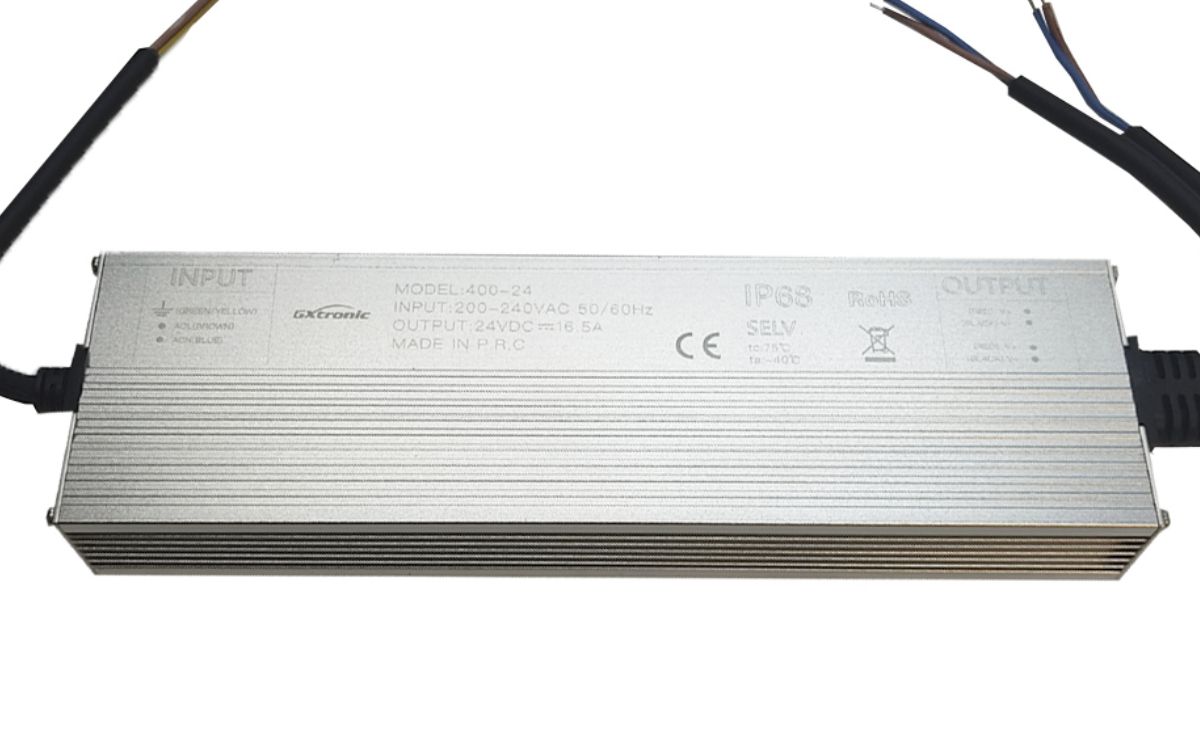
The driver converts mains alternating current into stable direct current for the chip. It is the component that fails most often in a low-quality LED high bay and the one that most distinguishes mid-range from premium product.

Philips Xitanium dimmable driver: the premium option

The Philips Xitanium driver is the market reference for demanding industrial applications. It operates across a wide temperature range (up to 70°C at the casing), has 10 kV surge protection, and carries ENEC certification. Its documented service life exceeds 100,000 hours. In projects where the driver must outlast the chip, and sometimes it does, this specification matters.

1-10V and DALI dimming for intelligent systems

DALI dimming for high bays is the reference protocol for installations with centralised management. It allows each luminaire to be controlled individually from a SCADA or BMS system, lighting scenes to be programmed by zone, and consumption data to be recorded per point. The 1-10V dimmable UFO LED high bay is the more cost-effective alternative. It dims from 0 to 100% with a simple analogue voltage signal, compatible with almost any control system.

Both options allow power to be reduced to 20-30% when the warehouse is partially occupied. This improves the return on investment in variable-use scenarios.

Accessories that improve performance

Reflectors and their impact on light distribution

A well-chosen reflector can increase illuminance at the work surface by between 15% and 30% without changing the high bay's wattage. The UFO LED high bay with reflector directs the output that would otherwise be lost to the sides or backwards. 60° reflectors are the most common for high-ceiling warehouses; 90° or 120° for low-ceiling warehouses where greater lateral coverage is needed.

The pairing of high bay and reflector is not a commercial upsell: it has technical merit. A well-calculated project specifies the reflector as part of the solution, not as an optional accessory.

Suspension and fixing systems

UFO high bays accept three main installation systems: direct hook to a metal support, adjustable steel cable, and threaded rod. The adjustable cable is the most flexible for setting the mounting height in warehouses with a variable structure. The threaded rod provides greater rigidity in environments with vibration.

In warehouses with strong air currents near industrial doors or ventilation systems, an anti-rotation fixing is advisable to maintain the reflector's position.

How much you save by replacing discharge lamps

Replacing sodium vapour and metal halide with LED is the most direct economic argument in industrial refurbishment. The decision to replace metal halide high bays with LED means going from 430-450W actual per point (a 400W high bay including ballast) to 150W. A 150W LED high bay with equivalent luminous performance consumes 150W. The difference is 280-300W per point.

ROI calculation for a 1,000 m² warehouse

Illustrative example with indicative values. Actual figures depend on the energy price, hours of use, and the condition of the existing installation.

Scenario: 1,000 m² warehouse, 30 x 400W metal halide high bays (450W actual including ballast), 3,000 hours/year operation, energy price 0.15 €/kWh.

Item Current installation (metal halide) LED installation (150W)
Total installed wattage 13,500W 4,500W
Annual consumption 40,500 kWh 13,500 kWh
Annual energy cost 6,075 € 2,025 €
Annual saving — 4,050 €
Estimated installation cost — 12,000 – 18,000 €
Return on investment — 3 – 4.5 years

On top of this comes the maintenance saving: the service life of an LED high bay exceeds 50,000 hours compared to 15,000-20,000 hours for metal halide, which halves or more the lamp replacements over a ten-year cycle. And it eliminates hot restarts: if there is a power cut, LED returns to 100% in seconds, not 15 minutes.

Energy efficiency grants and subsidies for industry should also be factored in. The actual payback period can be shortened if the project qualifies for these programmes.

Request a personalised quote for your industrial refurbishment project.

Frequently asked questions about industrial UFO LED high bays

What is the minimum height at which a UFO LED high bay can be installed?

The recommended minimum installation height for an industrial LED high bay is 4 metres from the floor to the work surface. Below that level, the risk of direct glare is high and other industrial luminaire formats should be considered.

What wattage UFO high bay do I need for an 8-metre warehouse?

For a warehouse with 8 metres of clear ceiling height, the standard range is 100W to 150W. The exact figure depends on the required illuminance level, the floor and wall reflectance index, and the spacing between light points. A photometric calculation using the actual warehouse data gives the definitive figure.

Do UFO LED high bays work in humid warehouses?

Yes. The IP65 LED high bay for humid warehouses is the minimum specification required. The IP65 rating for industrial wet areas guarantees complete protection against dust and water projected from any direction. For areas with pressurised water or partial immersion, higher ratings are needed (IP66 or IP67).

What is the difference between Samsung and Osram chips in industrial high bays?

The Samsung 2835 chip offers a better efficiency-to-price ratio and is the standard choice for large-scale refurbishment projects. The Osram Duris chip has a higher unit cost, but its durability documentation is more thorough and it is designed for environments with extreme temperature or vibration. The choice depends on the warehouse environment and the project's level of demand.

Can UFO LED high bays be dimmed?

Yes. 1-10V dimmable UFO LED high bays accept standard analogue dimming. Models with DALI protocol support individual digital control from building or installation management systems. Not all high bays include a dimmable driver as standard: this must be verified in the data sheet before specifying.

How long does it take to recoup the investment when switching from metal halide to LED high bays?

In the indicative example of 30 high bays at 3,000 hours/year with electricity at 0.15 €/kWh, the payback falls between 3 and 4.5 years. With more hours of use or a higher energy price, the period shortens. With active grants, it shortens further.

Choosing the right industrial LED high bay means getting the wattage right, specifying a documented chip, and using a quality driver. That is what ensures the energy saving is maintained throughout the service life.

Do you have an industrial lighting project? Request a no-obligation quote.

 
Posted in: Sample Category

Leave a comment

★
★
★
★
★
Security code
Blog navigation

Latest posts

Outdoor Lighting Trends for Summer 2025: What's In This Year

This summer's outdoor lighting trends bet on less light, better distributed and with more personality. We review six...

Read more
LED Lighting for Sports Facilities: Regulations and Professional Solutions

LED lighting for sports facilities requires uniformity, low glare and compliance with the UNE-EN 12193 standard. This...
Read more
European Energy Efficiency Regulations in LED Lighting: What You Need to Know in 2025

European energy efficiency regulations changed the rules for professional LED lighting. This guide summarises which...
Read more
RGB and CCT LED Controllers: What They Are, How They Work and Which One You Need

RGB and CCT LED controllers are the piece that decides the colour, brightness and temperature of your LED strip. We...

Read more
The 8 Best Selling LED Luminaires for Commercial Premises and Why They Work

Guide to LED luminaires for commercial premises with the eight models installers repeat most in shops and businesses,...

Read more