You buy an LED strip, connect it to the power supply and it lights up in a single colour. For RGB LED strips to change colour, you need another piece. RGB CCT LED controllers send the commands to the strip and adjust the colour, the intensity and the temperature of the light. Choosing wrong is the most common mistake, and you avoid it by checking the type of strip and the voltage.
What an LED controller is and why you need one
To understand what an LED controller is, think of a tap regulator. The power supply provides the energy for your LED lighting and the controller decides how much goes through and where.
The bridge between the power supply and your LED strip
The power supply converts the 230V from your home into 12V or 24V. The controller is placed after it, in the middle of the cable, and distributes that current between the channels of the strip.
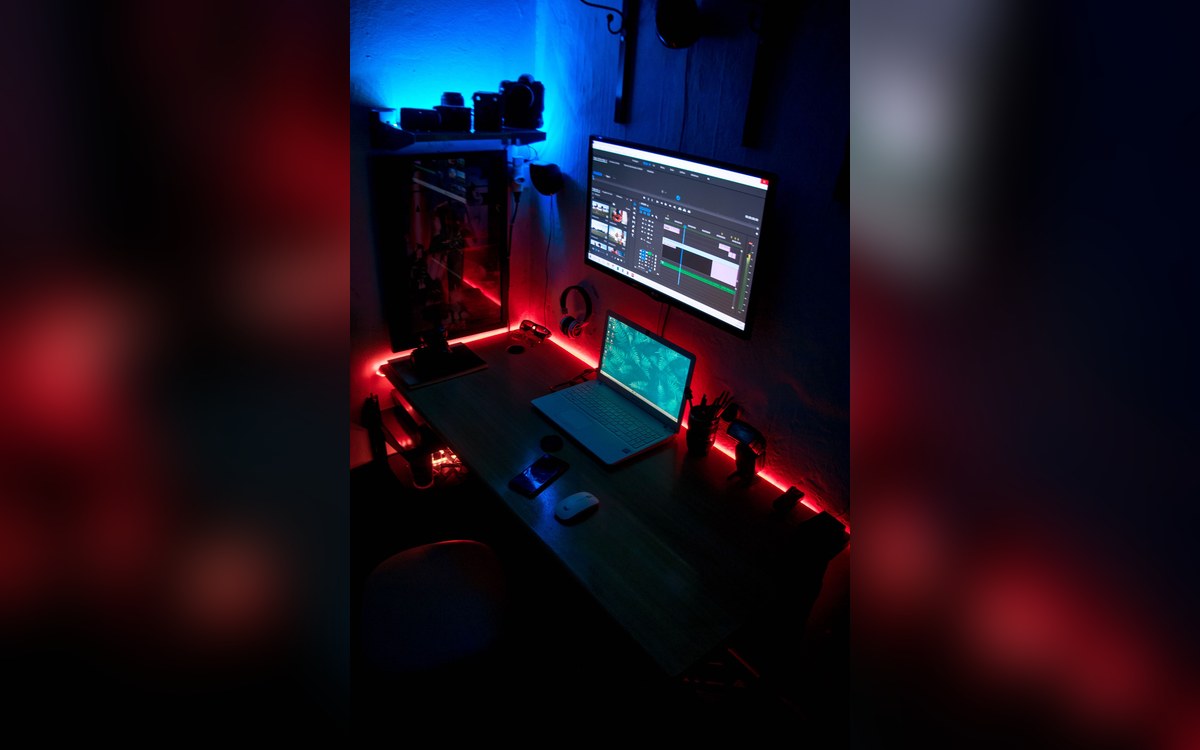
A 22-year-old wanted to set up RGB lighting in his room after seeing gaming setups online. He almost gave up among so many acronyms, such as RGB, RGBW, RF or CCT. A simple guide explained that an RGB controller with an RF remote was enough, and he installed it in under ten minutes.

Types of controller according to the colour of the strip
RGB CCT LED controllers are classified by channels. The options are single-colour, CCT, RGB and RGBW controllers, and each one goes with a specific type of strip.
Single-colour controller: the simplest one
An LED controller for a single-colour strip is only used to adjust the brightness. It has a single channel and works with a single-colour LED strip of one shade, such as warm white under a kitchen cabinet. A mini LED controller for a single-colour strip fits inside an aluminium profile and is operated with a small remote.
CCT controller: adjustable colour temperature
A CCT strip has two rows of LEDs, one warm white and one cool white. The controller mixes the two. In the morning you can set 6500K to wake up and at night 2700K for dinner. If you are looking for how a CCT LED controller works, the answer is mixing two white channels, so that the more one goes up, the more the other goes down.
Tunable white COB strips need a compatible LED controller for COB strips, with two channels and the right voltage.
RGB and RGBW controller: colour and total creativity
An RGB mixes red, green and blue and obtains millions of RGB colours. If you are looking for how an RGB LED controller works, the answer is three channels that go up and down at the same time. Its weak point is white, which comes from mixing the three colours and ends up bluish.
This is the difference between an RGB and an RGBW controller in a few words. The RGBW adds a fourth channel with a pure white LED, and the white comes out clean. For a gaming setup, an RGB is enough. For a living room, an RGBW is better. There are also five-channel RGB CCT LED controllers, which combine colour and tunable white.

How the remote control of an LED controller works
RGB CCT LED controllers receive the commands by infrared, by radio or by wifi. Each route has its limits.
Infrared remote: simple and affordable
An infrared remote control works just like the one for your TV. You have to point at the receiver and stay a few metres away. It does not go through walls and fails if a piece of furniture blocks the view. An LED controller remote of this type comes with colour buttons and preprogrammed modes.
RF 2.4GHz control: longer range and reliability
An RF 2.4GHz LED controller uses a wireless RF signal that does not need direct line of sight. It goes through partitions and doors, and reaches several dozen metres in open space. Many RF remotes offer multiple control zones, so each key controls a group of strips. With a multi-zone LED controller you can leave the living room in blue and the kitchen in white.
Controllers with a mobile app: the next level
An LED controller with a mobile app is operated from your phone. The controller's wifi connection links the device to your router, and the app sends the commands and controls the lights of the whole house.
The app adds functions that a remote does not have. One is scene programming, for example a warm sunset light or a blue one for watching a film. Another is music sync, which makes the colours follow the rhythm. If you are looking for an LED controller for a smart home, choose one compatible with smart devices such as Alexa or Google Home and you will switch it on with your voice.

How to choose the right controller for your LED strip
When looking for LED controller price and types, it is worth knowing that the cost goes up with the amps and the functions. RGB CCT LED controllers are chosen with two data points from the strip, its voltage and its consumption.
Check the voltage and amperage of your installation
The compatible 12V 24V voltage of the controller must match that of the strip and the power supply. Mixing them burns the strip or stops it from lighting up. If you are looking for the difference between a 12V and a 24V LED controller, the key is on the label, because a 12V strip needs a 12V power supply.
Then check the maximum amperage of the controller and compare it with your strip. Divide its total power by the voltage. Five metres of a 14.4 W/m strip add up to 72 W, which at 12V is 6A. Leave a 20 % margin.
Verify compatibility with the type of strip
Count the pins of the strip connector and look for the matching row in this quick guide.
| Type of strip |
Connector pins |
Controller needed |
| Single colour |
2 |
Single colour |
| CCT, tunable white |
3 |
CCT |
| RGB |
4 |
RGB |
| RGBW |
5 |
RGBW |
| RGB+CCT |
6 |
RGB+CCT |
This rule applies to all types of LED strips, from LED strips and flexible neon to 24V DC LED strips. The power supply also matters, and you will find the options in power supplies and drivers.
How to install an LED controller step by step
Connection between power supply, controller and strip
If you are looking for how to connect an LED controller to a strip, the process follows a fixed order. Ease of installation is high, and the installation between power supply and strip is done like this.
- Disconnect the power supply from the mains.
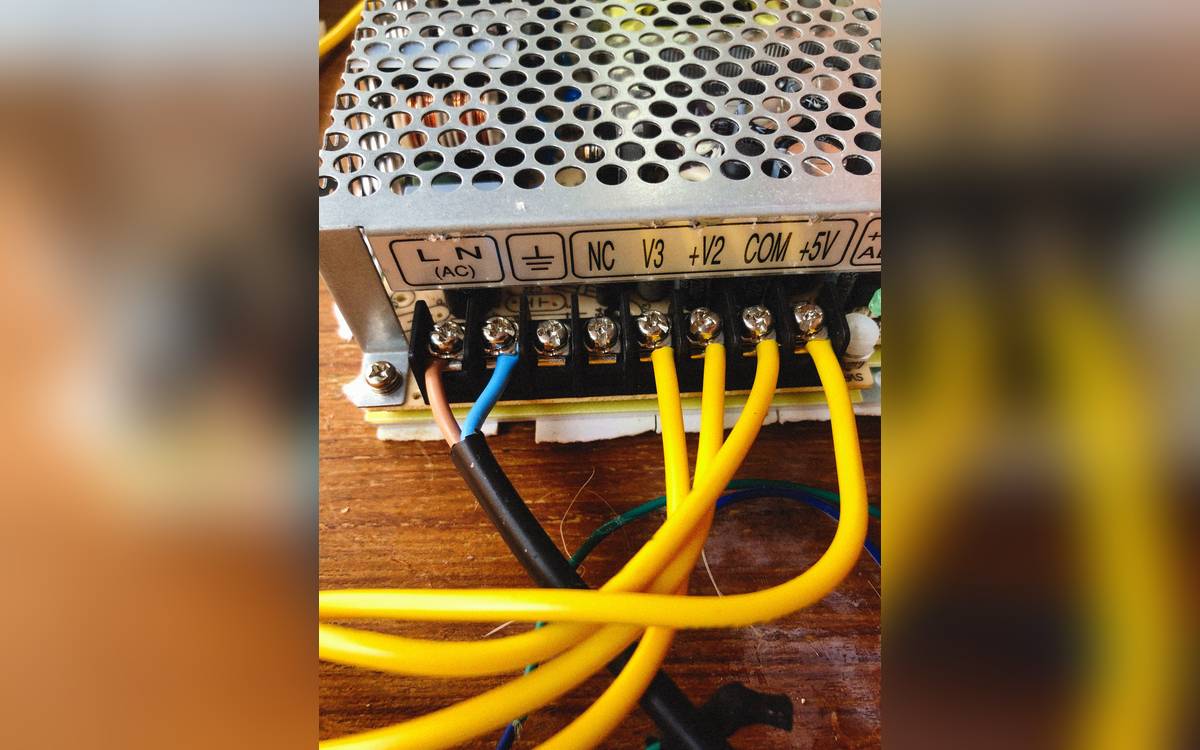
- Join the output cables of the power supply to the input of the controller, respecting positive and negative.
- Connect the strip to the output of the controller and match each colour with its terminal.
- Fix the controller in a ventilated place.
- Switch on and test each colour.
Frequently asked questions about RGB CCT LED controllers
What is the difference between an RGB and an RGBW controller?
The RGB has three channels and creates white by mixing colours, with a slightly bluish result. The RGBW adds a fourth channel with a white LED and gives a clean white.
Can I control my LED strip from my phone with any controller?
No. Only controllers with wifi or Bluetooth can be operated from a phone. Check in the product sheet that an app is included before buying.
What amperage should my controller have according to the length of my strip?
Divide the power of the strip by the voltage and add a 20 % margin. A 72 W strip at 12V needs a controller of 8A or more.
Do RF controllers work through walls?
Yes, in most cases. The 2.4GHz signal goes through partitions and furniture, something infrared cannot do. Concrete walls reduce the range.
Can I connect several LED strips to a single controller?
Yes, if they are of the same type and the sum of their consumption does not exceed the amperage of the controller. To control each strip separately, choose a multi-zone model.
What controller do I need to change the colour temperature of my strip?
A CCT controller, if the strip is tunable white. If the strip also has colour, you need a five-channel RGB+CCT.
With RGB CCT LED controllers now clear, complete the setup with the accessories for LED strips that your installation needs.
Leave a comment