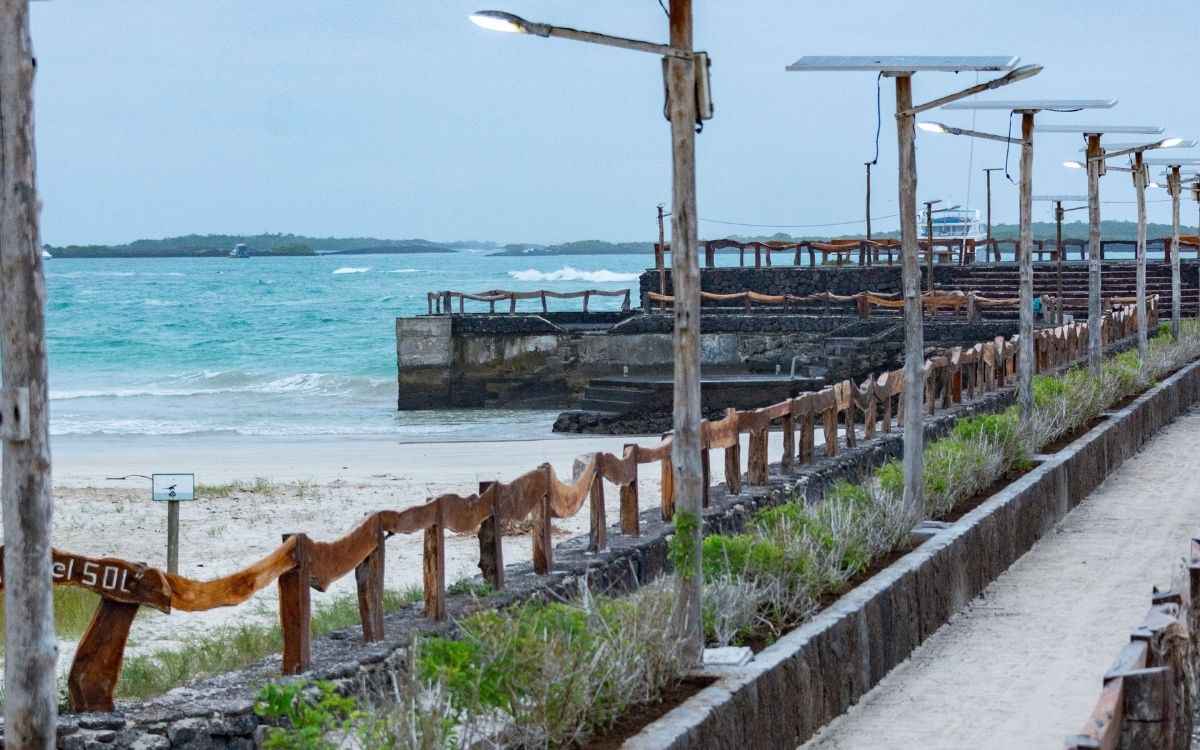
The owner of an olive grove in Jaén had to light 300 metres of track. Asking the electricity company for a supply point cost him more than the whole installation. He went for solar LED street lights and he was happy eleven months a year.
In the cloudiest weeks of January the light went out early. His installer had already warned him. In that area autonomy drops by 30% in winter. It was not a product fault, it was a limit he accepted in exchange for not laying 300 metres of cable.
Solar LED street lights perform very well within their limits and quite badly outside them. Knowing where that boundary lies is what separates a good decision from a nasty surprise.
How a professional solar LED street light works
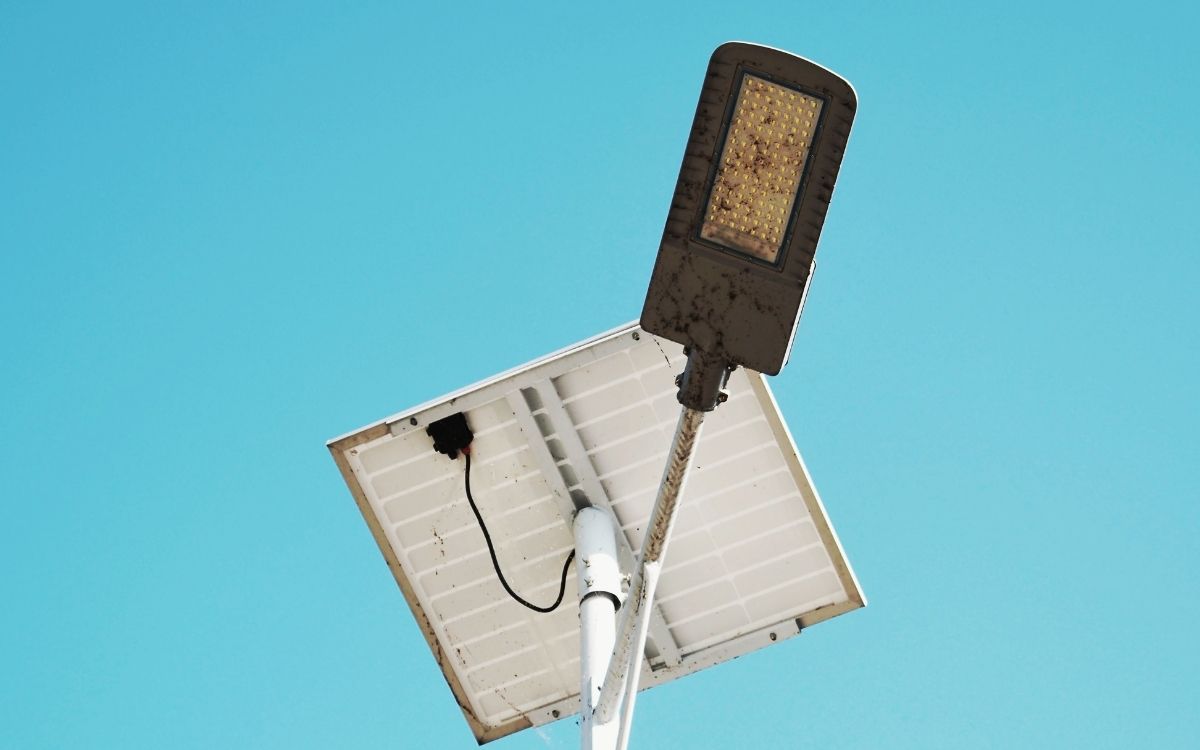
A professional solar LED street light is not a luminaire with a panel on top. It is a closed unit that captures, stores and delivers energy on the same pole. It does not touch the plot's electrical system.
Photovoltaic panel battery and sensor in a single unit
The integrated photovoltaic panel takes up the top face. Its cells generate electricity during the day and send it to the controller.
That controller manages energy storage in the battery. As evening falls, the solar dusk sensor notices the drop in light and triggers automatic switch-on. From then on the battery takes over.
Many solar LED street lights carry a motion sensor. The luminaire runs at 30% while nobody passes. On detecting movement it goes up to full, cutting consumption almost in half. That setting extends the days of autonomy without sun of solar LED street lights.
LED technology closes the circle. Every stored watt delivers three or four times more than in a sodium lamp. The whole lighting system works in a closed circuit. The photovoltaic system keeps producing energy under an overcast sky, but far less.

Solar LED street light advantages that hold up in practice
Solar LED street lights have three strong points that always hold, whatever the manufacturer.
Zero civil works or cable trenches
It is the most solid argument and the easiest to measure. An installation without civil works is solved with a footing, four bolts and raising the pole. No trench, no inspection chamber and no crossing permits.
On that 300-metre track, the trench can take between 60% and 80% of the spend. That is an example figure and it depends on the ground. The solar LED street light installation budget goes almost entirely into the product. The further away the connection point is, the more solar wins.
Zero energy cost once installed
With no grid connection there is no meter and no billed electricity consumption. Here energy efficiency is not a datasheet figure. It decides how many hours solar LED street lights stay lit. The only energy available is what came in through the panel that afternoon.
Anyone searching for "solar LED street light price" and comparing it with a normal luminaire gets a shock. The useful calculation is the cost compared with the electricity grid. Add up the connection, the trench, the panel board and fifteen years of bills. In isolated sites, renewable energy wins hands down.
Ideal for areas with no access to the electricity grid
A standalone solar street light with no electricity grid solves cases where the other option does not exist or costs five figures. Supplying electricity to an isolated point takes a project, a licence and months of waiting.
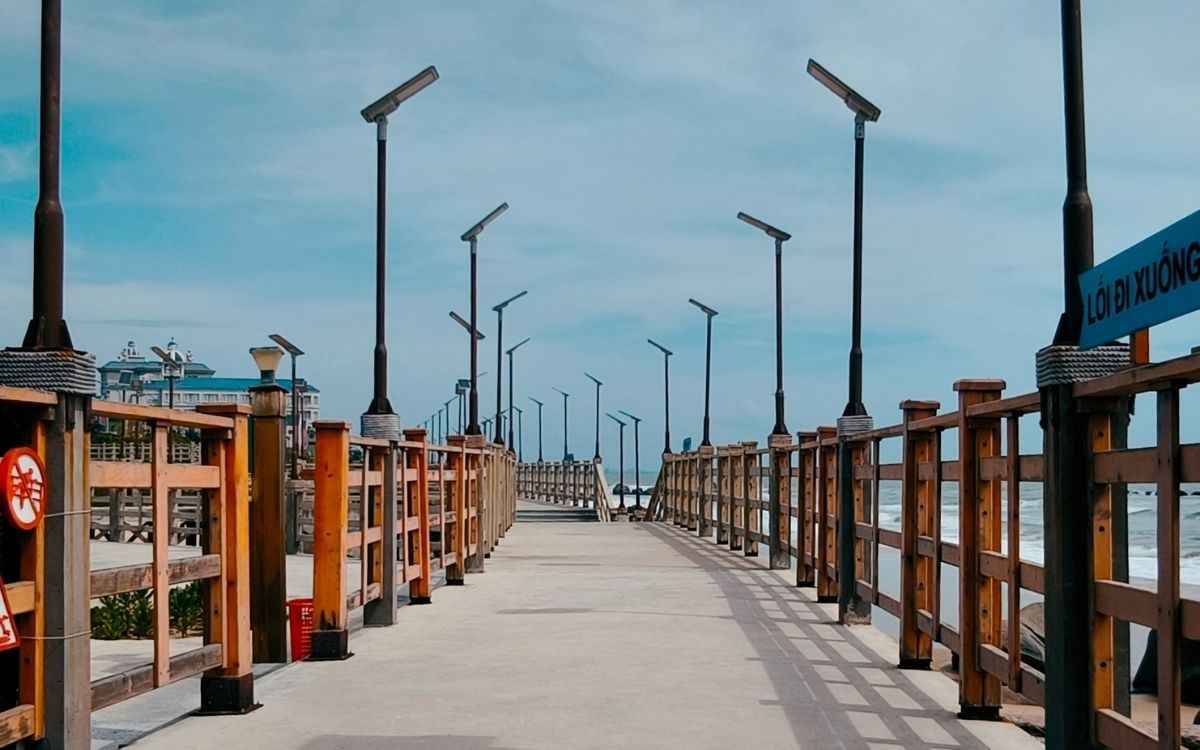
A solar LED street light for a rural property goes up in a morning. It gives outdoor lighting that same night. The same applies to warehouse yards and farm tracks.

Solar LED street light limitations that few sellers mention
Performance in winter and areas with low solar radiation
In December there are fewer hours of sun. The sun comes in lower. With the same panel, energy production can fall by half compared with July. And the battery covers longer nights with less charge.
- Zone I, less than 3.8 kWh/m² per day. Cantabrian coast. Much larger equipment.
- Zone II, from 3.8 to 4.2 kWh/m². Inland Galicia and northern Castile. Tight in January.
- Zone III, from 4.2 to 4.6 kWh/m². Madrid, Catalonia and the Ebro. Fine if the calculation is good.
- Zone IV, from 4.6 to 5.0 kWh/m². Southwest and Levante. Comfortable all year.
- Zone V, 5.0 kWh/m² or more. South and the Canary Islands. The best case.
The ranges come from the Spanish Technical Building Code (CTE) and serve as a guide, not as a calculation. Outside zones IV and V, solar LED street lights sized with summer data fail in January. To make the most of the available radiation, the panel is tilted according to latitude. And it cannot have shade over it at any time of year.
Limited autonomy on low capacity batteries
This is where the sector's misleading marketing concentrates. Ask for three figures in writing before signing.
- Solar street light battery autonomy in full nights with no recharge at all
- Solar street light cloudy day performance measured in December and January, never as a yearly average
- Solar street light battery autonomy at the end of the warranty, with the cell already worn
A lithium battery loses between 2% and 3% of capacity per year. Solar LED street lights that give four nights in the first winter give three after five years. A serious manufacturer states it on the datasheet.
Solar LED street light maintenance of the panel and the battery
The unit needs regular maintenance, light but constant.
- Panel: one cleaning a year in dusty or bird-heavy areas and a check for new shade
- Solar battery maintenance: terminal check and full replacement every 6 to 10 years, sooner if it works in heat
Replacing the battery is the future cost almost nobody counts. Ask whether it can be taken out or whether it forces you to scrap the whole luminaire.
When solar LED street lights ARE the right choice
Rural properties tracks and accesses with no grid
A solar street light for rural areas fits with three conditions. The connection point is more than 50 metres away.
Night-time use is moderate. And a short night in January does not create a problem. Tracks, property entrances and warehouse yards fall in there.
Projects where civil works are unfeasible or very expensive
Historic centres with protected paving, gardens already planted and rocky ground. The solar street light versus grid-connected street light question is almost always settled on the trench line of the budget.
When it is not the best option
Roads that demand the same light level every night
The public lighting of a road has to give a minimum light level, well distributed, every night of the year. A solar LED street light project for municipalities on streets with cars cannot guarantee that level in January.
It is worth being clear about when not to use a solar LED street light. On through roads, roundabouts and streets with traffic, the grid is still the answer.
Areas with low average annual solar radiation
In zones I and II there is fog and mountain shade. Covering winter takes large equipment. And that pushes up the price of solar LED street lights. There comes a point where the panel and the battery cost more than the line.

How to choose the right solar street light for your project
Battery capacity and panel power needed
Ask for these five figures before buying.
- Lithium battery autonomy. The capacity in Wh and the nights declared. Bad sign: they only give amp hours.
- Panel power. The peak watts and the real surface. Bad sign: the peak figure without saying how it is measured.
- Solar panel service life. The warranty and the loss per year. Bad sign: that figure does not appear.
- Geographic location and solar radiation. The calculation done for your area. Bad sign: the same datasheet for the whole of Spain.
- Cost compared with the electricity grid. The quote with and without a trench. Bad sign: only the product price.
As a rule, on solar LED street lights the battery should cover three full nights. The panel should generate enough energy to replace one night on an average December day. If all you get is lumens and watts, figures are missing.
The public and street lighting catalogue holds the street lighting, and solar LED street lamps the stand-alone units. For access points and short stretches, the outdoor and garden LED floodlights.
Frequently asked questions about solar LED street lights
How long does the battery of a solar LED street light last in winter?
On a properly sized unit, between two and four full nights with no recharge. The figure drops in winter because the panel puts back less charge. If the manufacturer does not separate summer and winter, the figure is useless.
Does a solar street light work in areas with many cloudy days?
It works, with caveats. The panel still captures diffuse light, but it charges far less. In regions with closed-in winters you have to fit a larger panel and battery. Even so there will be short nights.
Does the solar panel of an LED street light need maintenance?
Little, but constant. One cleaning a year and a check for new shade are almost always enough. In dusty or bird-heavy areas, two cleanings.
How much does a solar street light cost compared with a grid-connected one?
The solar product costs more and the installation far less. From 40 or 50 metres to the connection point onwards, the total usually favours solar LED street lights. With a new grid connection, even more so.
Can a solar street light be installed in any location?
No. It needs open sky to the south, with no shade from buildings or trees all year round. An inner courtyard or a narrow north-facing street rule the option out.
How many years does the battery last before it has to be replaced?
Between 6 and 10 years for lithium, depending on charge cycles and the heat it takes. Strong heat wears it more than cold does. Before buying, confirm that the battery is replaced separately from the luminaire.
Leave a comment