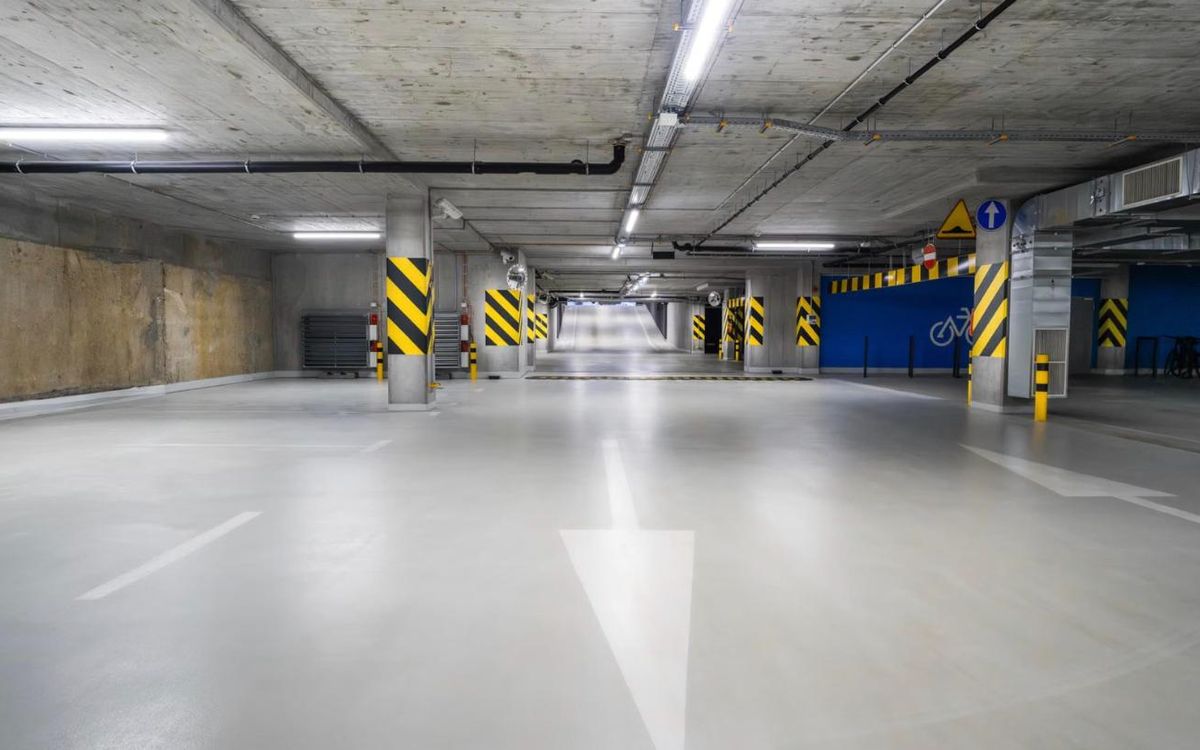
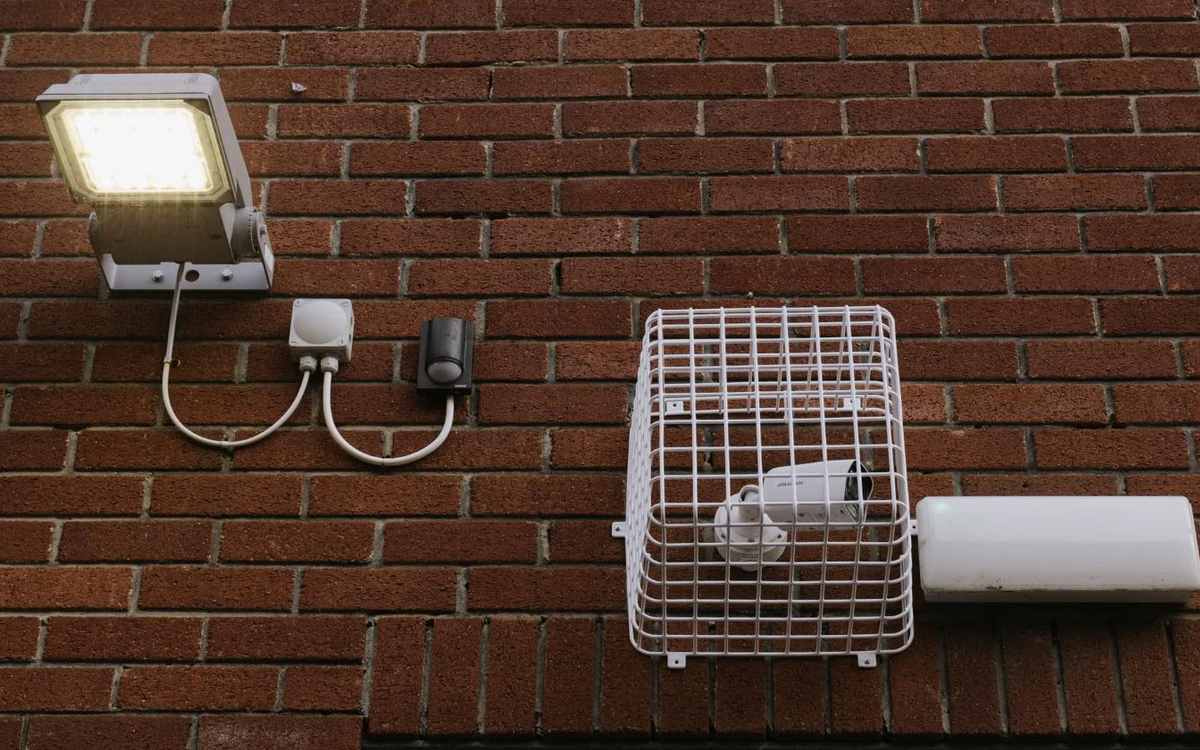
The owner of a shared garage in Seville was getting complaints almost every week. The lights stayed on all night because nobody switched them off on the way out.
He fitted 180 degree PIR detectors in every bay and in the first month the building's electricity bill dropped by 45%. But the detectors on the ramp were being triggered by the branches of a nearby tree.
An installer swapped that area for a radar sensor, less sensitive to wind. Nobody has complained since.
LED motion sensors work when the technology matches the space, not when the device is the most expensive one in the catalogue.
Why add LED motion sensors to your installation
LED motion sensors turn lighting systems into equipment that switches itself on only when needed. That is where the two reasons behind the purchase come from.
Automatic energy saving with no effort
In a corridor or a garage the light stays on far longer than it is used. The detector cuts those dead hours and raises energy efficiency without anyone having to remember anything.
The unit saves energy as soon as traffic is occasional. That is why stairwells, storage rooms and car parks show the difference first.
Security and convenience at entrances and walkways
A light that comes on as you reach the door saves hunting for the switch with your hands full. At an outdoor entrance it also deters, and many security systems use it as a first warning.
Indoors, convenience counts as much as the saving. Nobody turns the hallway light off in the middle of the night.
PIR or radar technology: the difference that matters
LED motion sensors split into two types of sensor. Choosing wrongly between them explains almost every detector that disappoints.
How an infrared PIR sensor works
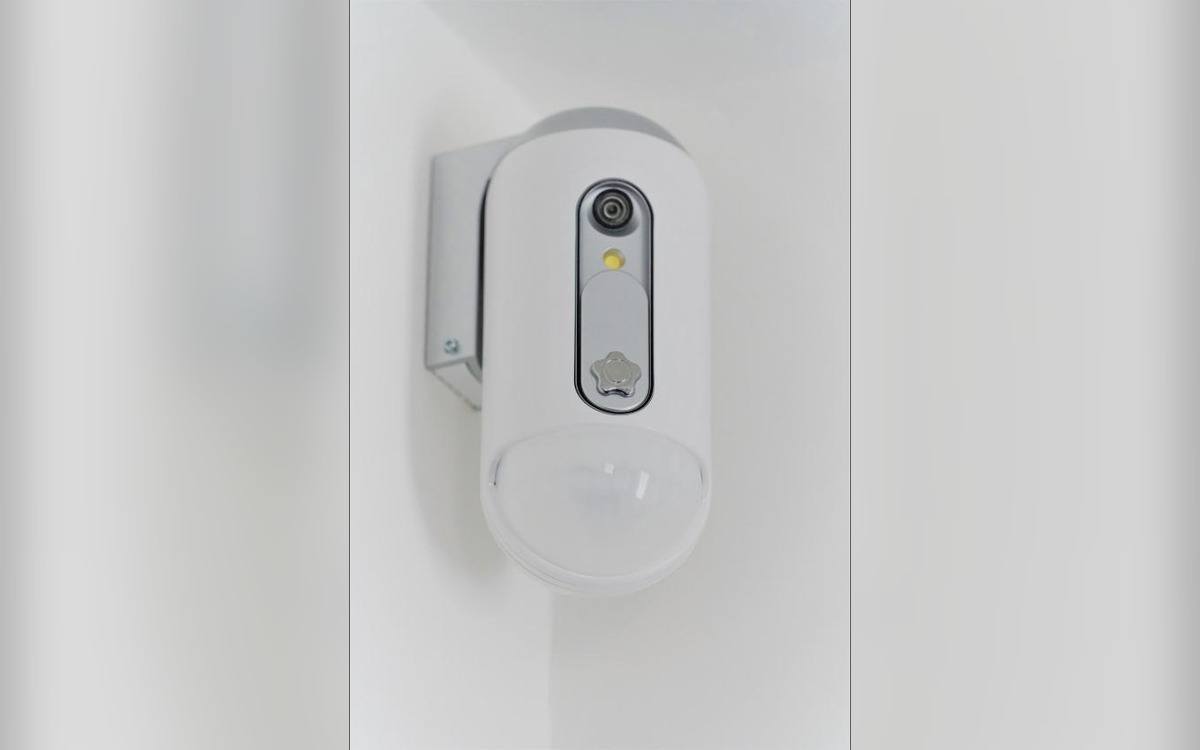
Infrared PIR technology detects the heat a body gives off as it moves. It emits nothing, it only reads the temperature changes crossing its field of view.
That carries a condition: it has to see the area. A door, a pillar or thick glass leaves it blind. In exchange it draws very little power.
How a microwave radar sensor works
Microwave radar technology emits a signal and measures how it returns. Any object moving inside the field alters that signal and triggers the light.
Because it is an active emission, it passes through thin materials such as plasterboard or a wooden door. It picks up small movements that infrared misses.
When radar detects better than PIR
The radar versus infrared question is settled by looking at the space, not the datasheet. Radar wins with obstacles, under high ceilings and wherever someone almost still has to be detected.
PIR wins outdoors with vegetation and anywhere you want the detector not to see past a wall. The comparison reads better in a table.
| Parameter |
Infrared PIR |
Microwave radar |
| Principle |
Reads body heat in motion |
Emits microwaves and measures the return |
| Obstacles |
Needs direct line of sight |
Passes through plasterboard, glass and thin wood |
| Slight movement |
Loses it easily |
Detects it well |
| Wind and branches |
Can trigger on thermal changes |
Less sensitive to leaves and air |
| Own consumption |
Very low |
Somewhat higher |
| Typical area |
Entrances, gardens, lobbies |
Garages, warehouses, high ceilings |

Key parameters for choosing the right detector
The datasheet of an LED motion sensor comes down to four figures. How to choose a motion detector is answered with them.
Detection angle and range
Two figures always go together: the detection angle in degrees and the detection range in metres. The first says how much motion detection covers horizontally, the second how far it reaches.
A 180 degree LED motion detector covers a whole wall and does not look behind it, useful on facades and in corridors. A 360 degree motion detector goes in the centre of the ceiling and covers the room.
The higher the detector is mounted, the more surface it covers and the less sensitive it is to detail.
Adjustable sensitivity and time delay
Almost all of them come with two adjustment dials. The adjustable lux sensitivity one decides at what ambient light level the unit activates, so it does not switch on during the day.
The other sets the switch-off delay time, how long the light stays on after the last movement. From ten seconds to several minutes depending on the model.
A motion detector with adjustable light and sensitivity lets you correct the behaviour without replacing the unit. Those two dials are worth paying for.
IP protection rating by location
Mounting is given as recessed or surface installation and decides whether you need a false ceiling or whether the detector stays visible.
For dry indoor use an IP20 is enough. An IP65 outdoor LED motion detector withstands rain and dust. The IP65 label means the body resists pressurised water jets from any direction.
The mounting and protection options are in the presence detectors category.

Motion detectors by type of space
The space outranks every other criterion when choosing LED motion sensors. These are the four most repeated cases.
Indoor corridors and stairwells
A corridor LED motion sensor works better on the ceiling and with a wide angle. Passage is quick and the detector has little time to react.
Vertically the problem changes. An LED motion sensor for stairs has to cover the whole flight, so many installations fit one per floor.
Where the false ceiling is thin, a slim LED ceiling motion sensor barely projects from the plane and goes unnoticed.
Garages and car parks
A garage LED motion detector faces cars, pillars and high ceilings. Radar usually performs better because it detects the vehicle before it appears in the line of sight.
Many installations combine detector and luminaire in one unit. Waterproof fittings and battens with an integrated sensor save wiring and points of failure.
Outdoors, gardens and entrances
In outdoor lighting the sealing and the weather conditions of the site are what count. A well aimed PIR does not look towards the street or towards the crown of a tree. The usual mounting height is two to three metres: higher and it loses sensitivity, lower and any cat sets it off.
Integration into LED strip profiles
An LED profile motion sensor runs at 12V or 24V and sits between the power supply and the strip. It suits worktops, wardrobes and skirting.
A mini LED motion detector fits inside the profile and stays hidden behind the diffuser. The aluminium profiles for LED strip category holds the compatible formats.
The price of an LED motion sensor counts for little in the whole job, so it is not the place to cut back.

How to install a motion detector without mistakes
The electrical installation of LED motion sensors is simple, but the failures concentrate on two points. The load and the placement.
Compatibility with an existing luminaire depends on the detector's relay and on the type of driver, which also conditions the service life of the assembly. An LED with an electronic driver starts with a current peak that some cheap detectors cannot take.
Correct placement to avoid false positives
False positive detections are the problem that shows up most on forums. A high sensitivity setting multiplies the triggers, but they are almost always solved by moving the detector.
The repeated causes are four.
- A heat source in the field of view, such as a radiator.
- Vegetation moved by the wind.
- A reflection in glass.
- With radar, a thin wall with traffic on the other side.
The practical rule is to aim it perpendicular to the direction of travel. A PIR detects someone crossing its field far better than someone walking straight towards it.
Between a presence sensor and an LED motion sensor the difference matters. The presence one is there to detect the presence of minimal gestures and keeps the light on with someone seated. The motion one needs actual movement. For an office the first, for a corridor the second.
Frequently asked questions about LED motion sensors
What is the difference between a PIR sensor and a radar one?
PIR reads the heat of a body in motion and needs to see it. Radar emits microwaves, detects through thin materials and picks up smaller movements.
What range does a standard motion detector have?
A ceiling model covers around six metres of radius mounted at two and a half metres. Wall units at 180 degrees reach similar distances in one direction only.
Can I install a motion detector outdoors in the rain?
Yes, if the protection rating allows it. An IP65 withstands rain and water jets. An indoor IP20 fails in the first storm.
Why does my motion sensor trigger with nobody there?
Almost always because of something moving or changing temperature in its field: branches, warm air or a reflection. Lowering the sensitivity and reaiming it solves nearly every case.
Can the sensitivity of a motion detector be adjusted?
On most of them, yes. They carry a potentiometer for the ambient light level and another for the on time. Some add a third one for range.
Are motion detectors compatible with any LED luminaire?
Not with all of them. You have to check the maximum LED load power on the datasheet, which is considerably lower than the resistive load. If the luminaire exceeds it, an auxiliary relay is needed.
Leave a comment