An interior architect visits the opening of an international flagship store in Madrid. The first thing that catches their attention is neither the layout nor the product.
It's the light: narrow-angle spotlights on specific pieces, colour temperature shifting subtly from zone to zone, a recessed track that's almost invisible. They spend 45 minutes in the store without buying anything, but leave with three ideas for their next projects. When lighting manages to keep the customer there longer than planned, it has already done its job.
The LED retail lighting trends 2026 confirm this shift in priorities. Physical retail no longer competes on price or range alone, it competes on experience, and light is the most cost-effective tool for building it. This roundup brings together the 2026 commercial lighting trends shaping store design this year, along with the LED products that make them possible. If you're looking for 2026 LED lighting for shops that truly changes customer perception, here are the six trends making the difference.
Why lighting is taking centre stage again in retail
The customer and their new expectations of physical space
The customer walking into a shop in 2026 has already bought online before, knows the product and compares prices from their phone. At home, the customer lighting experience can't be replicated. That experience defines the journey through the physical space and highlights what matters.
LED lighting retail customer experience has, in fact, become an investment line in its own right within the store project. Brands no longer simply ask for adequate lighting as a minimum requirement. They ask for lighting design as part of brand identity, on the same level as furniture or ambient sound.
The store as experience: the role of light
The physical store is no longer just a product pick-up point. It's now a brand showcase competing with entertainment. In that context, every point of light serves a narrative function: it guides the eye, marks transitions between zones and gives the customer time to pause. This year's commercial lighting design trends revolve precisely around that idea of a journey, not just lux levels.

Trend 1 - Light minimalism and recessed tracks
Fewer luminaires, more impact
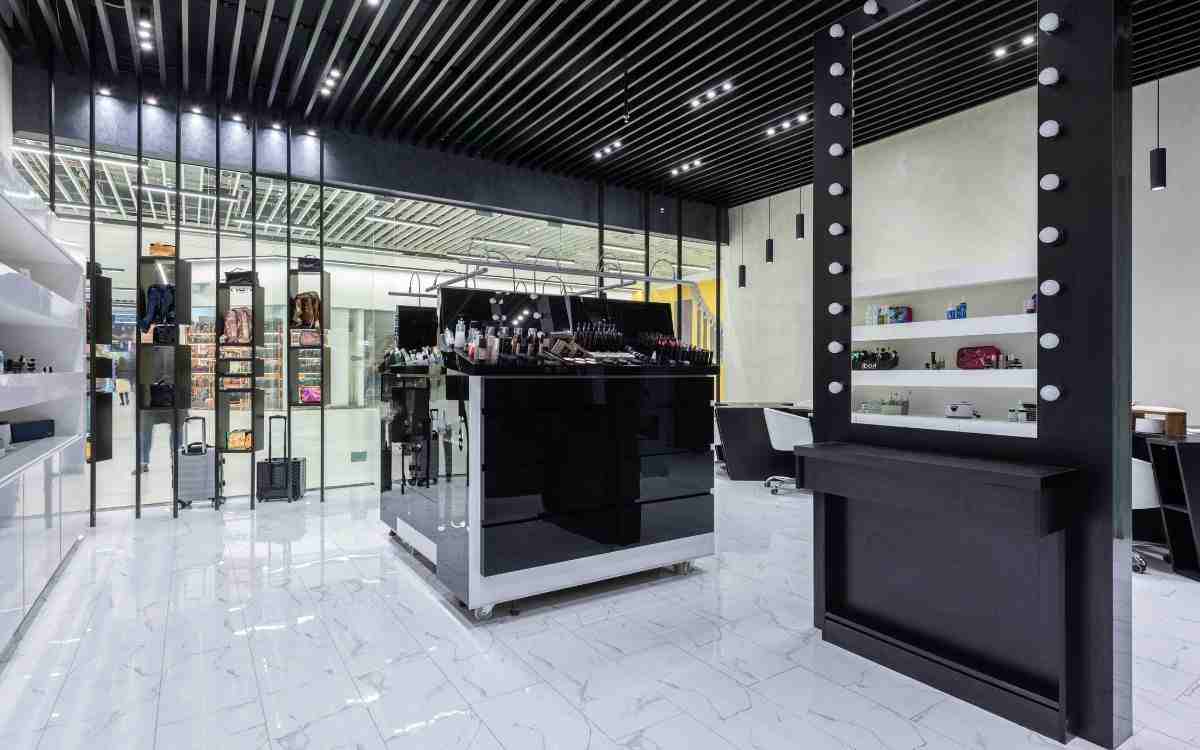
2026 minimalist LED shop lighting does away with ceilings crowded with spotlights and favours fewer, better-placed points of light. Recessed minimalist lighting embeds the track within the false ceiling, so the luminaire visually disappears and only the effect remains. The recessed-or-surface track also allows for mixed installation, recessed where the ceiling allows and surface-mounted where it doesn't, without breaking the space's aesthetic.
This trend fits particularly well with LED lighting for pop-up stores. Installation must be quick. The result has to look permanent, even if the store only lasts a few weeks. The recessed LED track retail trend also makes it easier to reconfigure the lighting when the layout changes, without any building work.
Trend 2 - High CRI as the minimum standard in fashion and jewellery
CRI98 at the premium point of sale
In fashion and jewellery, the product's true colour is the sale. CRI98 premium lighting has become the acceptable minimum in this segment. Any colour deviation under the light can translate into returns, because the customer sees the garment or piece under different conditions. High-CRI LED spotlights, a retail trend, show fabrics, leathers and metals in the exact tone they have in hand.
LED lighting for luxury and premium retail isn't limited to CRI. It also takes care with beam angle, absence of flicker and colour temperature stability over time. These are details a customer in this segment notices, even without being able to name them.
Trend 3 - Dynamic colour temperature during trading hours
Tunable white and its impact on the shopping experience
Retail tunable white allows the colour temperature of the same luminaire to change throughout the day. In the morning it can give a cooler white. In the afternoon, a warm white.
Tunable white lighting for shops roughly follows the customer's circadian rhythm. This reduces fatigue during long visits. The store feels different depending on the time of day, without changing a single luminaire.
This idea connects directly with circadian LED lighting for retail. It's also known as Human Centric Lighting retail 2026. It adjusts light to the body's natural cycles, instead of keeping the same intensity and tone at all times.
Trend 4 - Integrating lighting with management systems
Zone-based dimming and automated schedules
More and more stores are connecting their lighting system to the store's general home automation integration. This way, the light responds to schedules, occupancy or even the campaign calendar. A connected lighting solution allows intensity to be adjusted by zone without touching a switch. It also allows the ambience to be adapted automatically when the shop window changes or a promotion arrives.
This automation is part of the new retail lighting technologies. They're no longer seen only in large flagship stores, but also in mid-sized shops. Controllers have become more affordable and easier to install.

Trend 5 - Sustainability as a brand argument
Certified energy efficiency as commercial communication
2026 retail energy efficiency is no longer just a way to save on the bill, it has become a brand argument. Sustainable LED retail lighting allows something to be communicated to the customer. Sometimes a simple sign at the point of sale is enough. That sign explains that the store invests in energy savings and reduces its energy consumption compared with conventional lighting.
This commercial lighting sustainability doesn't depend solely on installing efficient LED lights. It also requires choosing an LED luminaire with a good lifespan, one that reduces replacements and waste over the years.
Trend 6 - Hyper-focused accent lighting
Narrow-angle spotlights for showcasing a single product
Dynamic light accent directs all attention towards a single piece, pushing the rest of the space into the background. A narrow-angle spotlight trims the light beam down to cover only the product. The edges stay well defined, with no spill onto nearby walls or floor. The difference is clear when comparing a 24-degree spotlight with a 36-degree one in the same shop window.
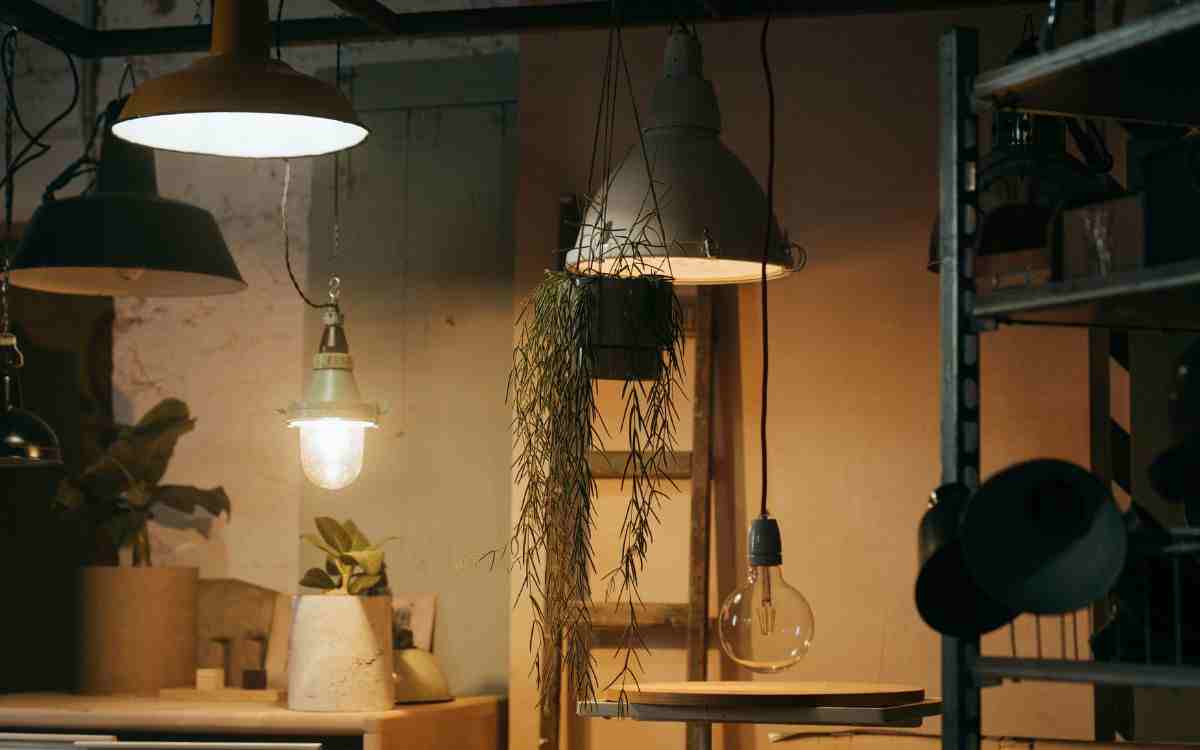
This technique turns any kind of general lighting into an editorial-style display, similar to a gallery's. It applies equally to LED spotlights and to a single pendant light over a presentation table. Combining several light sources in the same zone, some general and some accent, usually gives the most balanced result.

Which LED products follow the 2026 LED retail lighting trends
Three-phase CCT spotlights with high CRI
2026 dimmable LED shop spotlights with three-phase track allow the colour temperature to be changed directly from the spotlight itself. They don't depend on a centralised system. This makes it easier to adopt tunable white in already-built shops. These spotlights combine high CRI, an interchangeable beam angle and compatibility with standard three-phase track, the technical foundation of almost all the trends described so far.
Recessed tracks and flexible systems
The matte black LED track, a 2026 trend, has become the preferred finish in design-led shops. It visually disappears into dark ceilings. It doesn't compete with the displayed product.
Combined with a recessed track, it forms a flexible lighting system. It allows spotlights to be added, moved or removed as the range changes. It doesn't require a new installation every season.
Frequently asked questions about retail lighting trends
What minimum CRI is required in luxury retail in 2026?
In high-end fashion and jewellery, CRI90 is considered the acceptable minimum, and CRI97-98 the real standard in most premium projects. Below that level, the product's colours lose fidelity under artificial light.
Is recessed track viable in rented premises with a low ceiling?
Yes, as long as the false ceiling has at least 6-8 cm of free space. If the premises don't allow it, low-profile surface track gives a similar visual result without needing any building work.
How does LED lighting integrate with store management systems?
LED lighting integrates via controllers compatible with protocols such as DALI or 0-10V. These controllers allow schedules, scenes and intensity levels to be programmed from a single panel or an app. Everything is integrated with the rest of the premises' home automation.
Does dynamic colour temperature require special installation?
It requires tunable white luminaires and a compatible driver or controller. The wiring is usually the same as for a conventional LED installation, though it's worth checking with the installer before any renovation.
What's the visual difference between a 24 and 36 degree spotlight in retail?
The 24-degree spotlight concentrates the light into a smaller circle with more defined edges, ideal for a single piece. The 36-degree one covers a larger area, useful for display tables with several products.
Is it worth investing in premium lighting for a neighbourhood shop?
Yes, because the effect on perceived quality doesn't depend on the size of the business. Well-planned, adequate lighting improves the shopping experience for a moderate investment compared with the rest of the refurbishment.
Leave a comment