A rural hotel in the Serranía de Ronda changed its lighting without touching the décor or the menu. Within six months it appeared in three travel publications. Reviews started to mention the atmosphere. They only changed the light.
LED lighting for hotels and restaurants is not a finishing detail. It is part of the product. A customer does not remember the lumens or the beam angle, but they do remember how they felt in that space. And that feeling depends on the light sources chosen and how each area is managed.
This guide reviews area by area what type of lighting each space needs, which products work best and which technical parameters must be controlled.
Why lighting is part of the product in hospitality
What the customer remembers without knowing it is the light
When a guest describes a room as cosy or a restaurant as having atmosphere, they are describing colour temperature, contrast and dimming without knowing it. Warm light creates visual comfort. Cool light activates and brightens. LED technology allows these parameters to be adjusted with precision for thousands of hours, with energy consumption far lower than previous systems.
The most common mistake: using the same light throughout the space
Choosing a uniform type of lighting for the entire establishment is the root cause of most poorly resolved projects. The same downlight, the same colour temperature, the same intensity level everywhere produces a space with no character.
Functional vs decorative lighting are not mutually exclusive. The kitchen needs functional lighting for visual safety. The dining room needs decorative lighting to create atmosphere. The corridor needs both.

Lighting by area in hotels
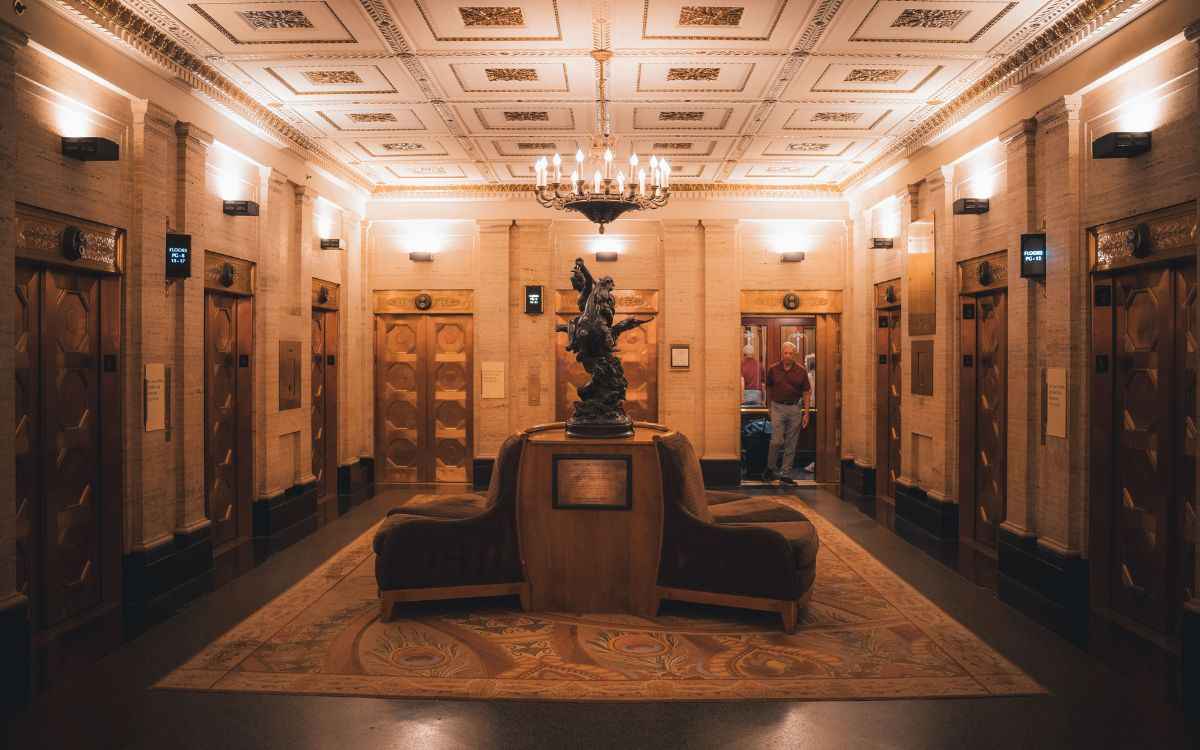
Reception and lobby: a lasting first impression
LED lighting for hotel reception must welcome guests and convey identity at the same time. The recommended colour temperature is between 2700K and 3000K.
Recessed floor uplighters guide the visitor from the entrance. A pendant fitting or several suspended points orient the space. High-CRI track spotlights highlight decorative elements and the counter with precision.
Rooms: rest and functionality in balance
The room concentrates several zones within a few square metres. The bed area needs lighting dimming for the rest zone to gradually lower intensity. The work area requires more light and a more neutral colour temperature.
The dimmable downlight for bedrooms is the base solution. The optimal colour temperature for hotel bedrooms is 2700K: warm light that facilitates unwinding. The LED bedhead wall light for hotel rooms allows the zone to be controlled without disturbing the other occupant.
The LED downlight for hotel rooms should always be dimmable for comfort and for energy consumption. This also allows for continuous energy savings.
For the bathroom, LED lighting for hotel bathroom IP65 is mandatory near the shower or bath. IP65 protection for wet areas in hospitality prevents electrical safety issues in steamy environments.
Corridors and common areas: safety without sacrificing atmosphere
The bidirectional wall light for hotel corridors emits light upwards and downwards. That distribution creates a continuous line that guides without glare and eliminates the need for ceiling downlights. LED signage lighting for hotels indicates emergency exits and room numbers without breaking the aesthetic.
LED lighting for hotel common areas requires systems with the possibility of adjustment according to the use of the space at any given moment.
Spa and wellness: light for total disconnection
LED spa and wellness lighting works between 1800K and 2700K, with low intensity and no visible direct sources. LED strips recessed into skirting boards or behind panels create indirect light that envelops the space. Dimming is essential because treatments have different rhythms. A poorly aimed LED spotlight above a treatment table breaks the experience.
Façade and outdoor garden: the hotel's nocturnal identity
LED exterior lighting for hotel gardens defines how the establishment looks at night. Good exterior lighting starts by choosing the right light sources for each element: floodlights for plant volumes, recessed fittings for pathways and wall lights for walls. A well-aimed LED floodlight for hotel outdoor terraces pointed towards trees or the façade creates depth.
For gardens and access paths, the recessed floor uplight is the cleanest option: it takes up no space and withstands foot traffic. LED strips along the perimeter of the pool or the edges of pathways add both safety and aesthetic appeal.

Lighting by area in restaurants
Dining room and restaurant floor: the colour temperature that drives sales
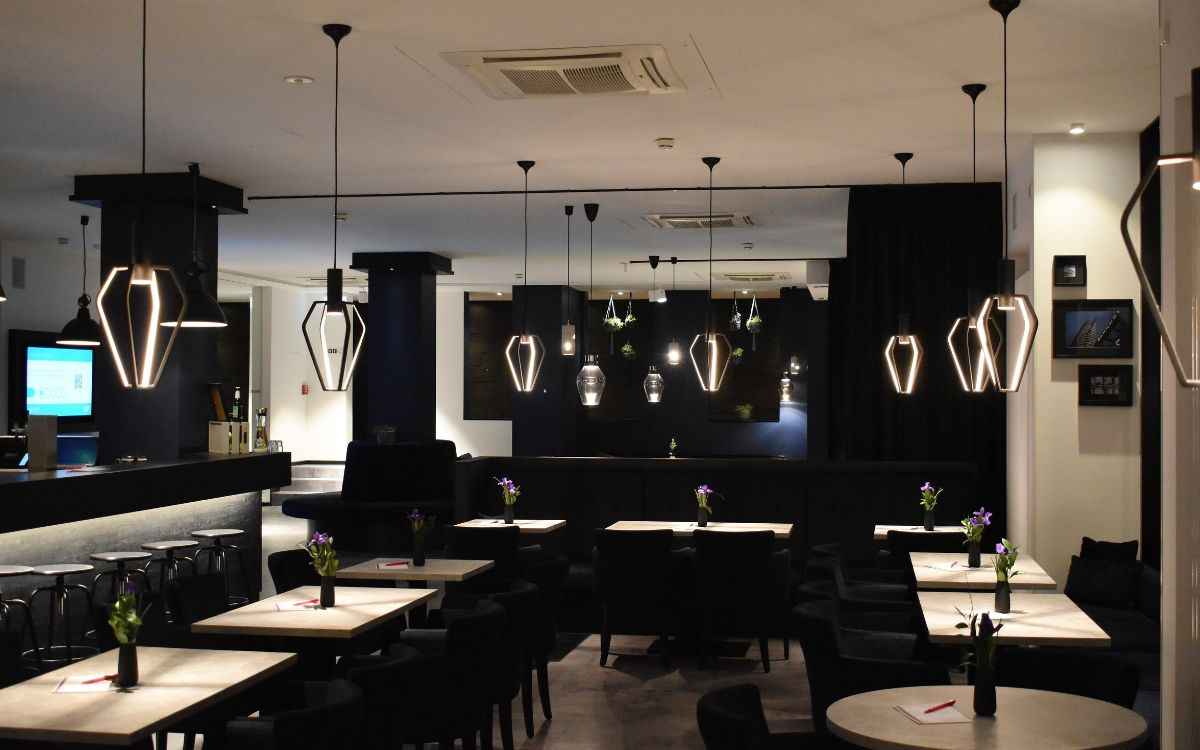
LED lighting for restaurant dining rooms has a clear objective: to make food look good and keep the customer comfortable. The recommended colour temperature for the dining area is between 2700K and 3000K. A CRI80 CRI90 rating in a restaurant makes the difference between a dish that looks good and one that shows its real colours. For mid-to-high-end dining rooms, a minimum CRI of 90 is required.
LED ambient lighting for restaurants is built with dimmable downlights in the ceiling and high-CRI LED spotlights for restaurants above the tables. The 2700K ambient temperature for hospitality is the most widely used reference in restaurants aiming for a warm atmosphere.
Bar and service area: functionality and character
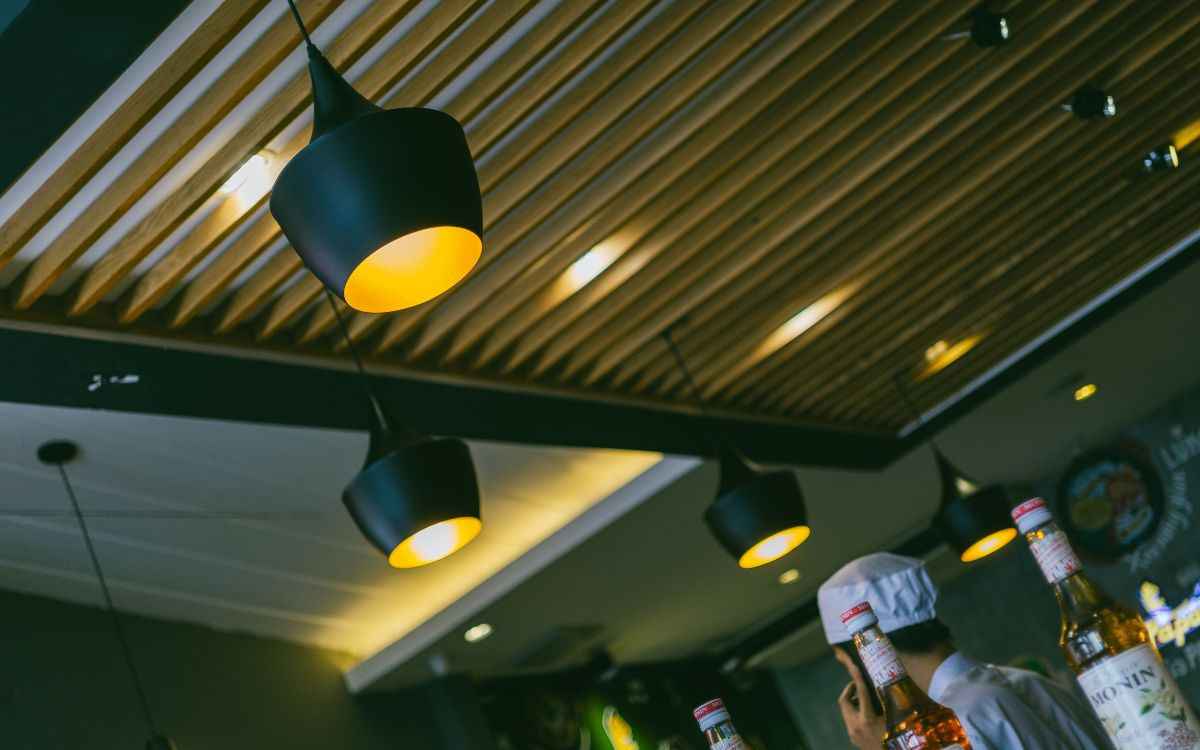
The LED track spotlight for restaurant bars illuminates the work area with sufficient intensity and highlights bottles and displays. Functional vs decorative lighting coexist here naturally. LED lights under the bar create the atmosphere and the track spotlights on the ceiling cover the work area.
Commercial kitchen: efficiency and visual safety
The LED panel for commercial restaurant kitchens provides uniform light, shadow-free, with high efficiency. The colour temperature moves towards cool white, between 4000K and 5000K. The CRI should not fall below 80: being able to see the colour of meat or fish correctly has direct implications for food safety.
High-efficacy LED panels allow energy savings with adequate lighting without sacrificing performance. Energy consumption in kitchens is high and the difference in the annual electricity bill with LED is significant.
Outdoor terrace: weatherproof floodlights and wall lights
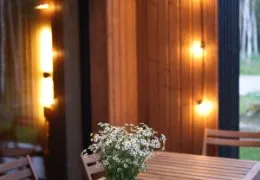
Outdoor terrace lighting combines LED terrace floodlights, wall-mounted fittings and LED strips on awnings or pergolas. Minimum IP44 for covered areas and IP65 for exposed areas. The recommended colour temperature is 2700K. Decorative filament-style LED bulbs on string lights create atmosphere with low energy consumption.

Key LED products for hospitality
Dimmable CCT downlights for bedrooms
The dimmable bedroom downlight with CCT technology allows the colour temperature to be changed from the room control. The guest adjusts between warm light to relax and neutral light to work. They are the foundation of any serious LED hospitality lighting project.
Bidirectional wall lights for corridors and exteriors
The bidirectional wall light for hotel corridors creates a continuous visual line with low energy consumption and a long service life. Outdoors, the LED bedhead wall light for hotel rooms is replaced by IP65-rated versions that withstand rain and humidity.
High-CRI track spotlights for dining rooms and restaurant floors
High-CRI LED track spotlights for restaurants are the most flexible solution for dining areas: they can be repositioned without any building work when the table layout changes. The high colour rendering index means that every dish and every surface is seen in its true colours.
| Area |
Colour temperature |
Minimum CRI |
| Lobby / Reception |
2700K - 3000K |
CRI80 |
| Bedroom |
2700K |
CRI80 |
| Hotel bathroom |
3000K |
CRI80 |
| Corridor / Common area |
2700K - 3000K |
CRI80 |
| Spa and wellness |
1800K - 2700K |
CRI80 |
| Garden / Façade |
2700K - 3000K |
CRI80 |
| Restaurant dining room and floor |
2700K - 3000K |
CRI80 |
| Restaurant bar |
2700K - 3000K |
CRI80 |
| Outdoor terrace |
2700K |
CRI80 |
Frequently asked questions about LED lighting in hospitality
What colour temperature is best for hotel bedrooms?
The standard reference is 2700K. It promotes unwinding and rest. In the work area within the bedroom it can be combined with a more neutral light point at 3000K.
What minimum CRI does a restaurant need to present dishes well?
The minimum recommended is CRI80. For mid-to-high-end restaurants, CRI90 is appropriate. With that rating, the colours of food are reproduced with precision and the visual result of the dish improves noticeably.
Can I control the lighting independently in each area of the hotel?
Yes. The rest zone dimming systems and the rest of the areas connect to independent controllers or to a centralised system. Each zone has its own light profile adjusted to its use.
What IP rating do the exterior wall lights of a hotel need?
In exteriors exposed to rain, the minimum is IP65. For covered areas with humidity, IP44 may be sufficient. LED lighting for hotel bathrooms IP65 also applies in bathrooms with a shower or bath.
How do I light a restaurant terrace so that it looks welcoming at night?
With a 2700K ambient colour temperature for hospitality, LED floodlights for hotel outdoor terraces aimed at decorative elements and LED strips in the ceiling or pergola structure. The key is to avoid very intense direct light sources and to create layers of light at different heights.
How much does it cost to light a hotel with quality LED?
It depends on the size, the number of areas and the range chosen. A well-planned LED hospitality lighting project typically recoups the investment within three to five years. The most effective way to adjust the budget is to work with a customised project area by area.
Do you have a hotel, restaurant or hospitality establishment to renovate? Request your personalised LED lighting project for hospitality and receive a proposal tailored to each area of your space.
Leave a comment