An HR director in Madrid had been dealing with the same problem for two years: her team complained of tiredness in the mid-afternoon. No management solution was working.
A specialist reviewed the lighting and they installed LED panels with dynamic colour temperature that started at 5000K and shifted to 3000K after 4 pm. Within three weeks the team noticed the difference without knowing why.
In the next workplace climate survey, the physical wellbeing item rose 18 points (illustrative figure). The director understood that day that the human body needs light to tell it what time it is.
Human Centric Lighting starts from exactly that premise. It is a discipline that aligns the artificial light source with the physiological needs of the people who work, study or recover under it.
What Human Centric Lighting is and why it matters now
To understand what Human Centric Lighting is, you need to move away from the concept of functional lighting. It is not simply about guaranteeing visibility. The aim is for the right lighting to regulate people's biological rhythms, improve their state of alertness and protect their night-time rest.
For decades, lighting criteria were measured in lux per activity zone and colour rendering index. These parameters are necessary, but not sufficient. The human body does not use light only to see. It uses it to know what time it is.
How artificial light affects the circadian rhythm
The internal biological clock synchronises wakefulness cycles, melatonin production and cortisol by following light signals. The circadian lighting rhythm functions as a synchronisation mechanism between light and the body. When artificial lighting breaks that synchrony, headaches, difficulty concentrating and poorer sleep quality appear.
Melanopsin blue light is the key mechanism. The retinal ganglion cells containing melanopsin are sensitive to short wavelengths. When they receive a signal at seven in the evening, they tell the brain it is still midday. Melatonin production is delayed and sleep arrives with less depth.
Circadian lighting adjusts the healthy light spectrum and luminous intensity throughout the day to reinforce the signals the body expects to receive.
From scientific concept to practical application
Human Centric Lighting does not require major building works. Current LED technology allows it to be implemented without major works. Luminaires vary their dynamic colour temperature and luminous flux according to the time of day. Control is managed with standard protocols such as 1-10V DALI CCT dimming.

How circadian LED lighting works
Dynamic colour temperature throughout the day
A Human Centric Lighting system organises the lighting cycle into three phases. In the morning, the dynamic LED colour temperature sits between 5000K and 6500K, with high lux levels per activity zone. At midday, the values are maintained. From mid-afternoon onwards, the temperature drops to 2700K–3000K and the luminous intensity is reduced, preparing the body for the recovery phase.
The difference between cool light and warm light is immediately perceptible. The colours of light emitted by a source at 5500K are perceived as active and bright. The same room at 3000K feels warm and less stimulating.
Variable CCT and tunable white: the technology behind HCL
Tunable white lighting contains two independent LED channels: one warm and one cool. By blending them in different proportions, the control system adjusts the CCT across a continuous range from 2700K to 6500K.
Variable CCT Human Centric Lighting is available in standard formats: dynamic CCT LED downlight, dimmable colour temperature LED panel and linear luminaires. Integration uses DALI or a 1-10V analogue signal. The underlying LED technology requires no additional maintenance and the service life is comparable to any professional LED luminaire.
Documented benefits of Human Centric Lighting
Improved performance and concentration
LED lighting that mimics natural light produces verifiable effects on cognitive performance. Visual comfort and productivity represent a measurable correlation between lighting conditions and work capacity. Circadian LED office lighting with a dynamic CCT pattern improves response speed compared to conventional fixed lighting.
The WELL building lighting standard includes specific requirements for circadian lighting. WELL certification is the benchmark in projects where appropriate lighting influences the value of the property.
Reduction of visual fatigue and absenteeism
Luminaires that follow a healthy light spectrum reduce accumulated visual fatigue. Working under a fixed light source generates eye strain and headaches. Systems that reduce visual fatigue through dynamic LED colour temperature act on workplace wellbeing with direct consequences for absenteeism. LED light that changes with the day and LED lighting to reduce fatigue improve the visual comfort and productivity of teams.
Applications in hospitals and healthcare settings
Circadian lighting in hospitals has stronger clinical evidence than any other environment. Recovery rhythms depend on sleep quality, and an HCL system can improve those cycles without pharmacological intervention. LED lighting for the wellbeing of healthcare workers also serves a safety function: it maintains alertness without compromising the rest of the night shift.

How to implement HCL in an LED installation
Compatible products: downlights and dynamic CCT panels
The dynamic CCT LED downlight and the dimmable colour temperature LED panel are the most common formats in professional catalogues. A dynamic CCT LED downlight can replace a conventional one if bus wiring is available. Without that wiring, ZigBee or Wi-Fi control is the alternative. An LED panel with an integrated DALI driver allows an entire floor to be managed from a central controller with energy efficiency equivalent to conventional LED.
DALI and 1-10V control systems for automation
Without automation, HCL does not exist. 1-10V DALI CCT dimming is the most widely used protocol in professional installations.
With DALI, each luminaire has its own address. The controller manages scenes and schedules with smooth transitions that the occupant does not perceive as abrupt changes. 1-10V dimming is a more cost-effective alternative for medium-sized installations.
Implementation cost and wellbeing return
The Human Centric Lighting installation price depends on the size, the protocol and whether there is an existing LED installation. A 500 m² project with DALI may represent an additional cost of between 20% and 35% compared to conventional LED (illustrative figure). The payback is calculated on productivity, absenteeism and the value of WELL certification.

Sectors where HCL makes the greatest difference
Offices and intensive workspaces
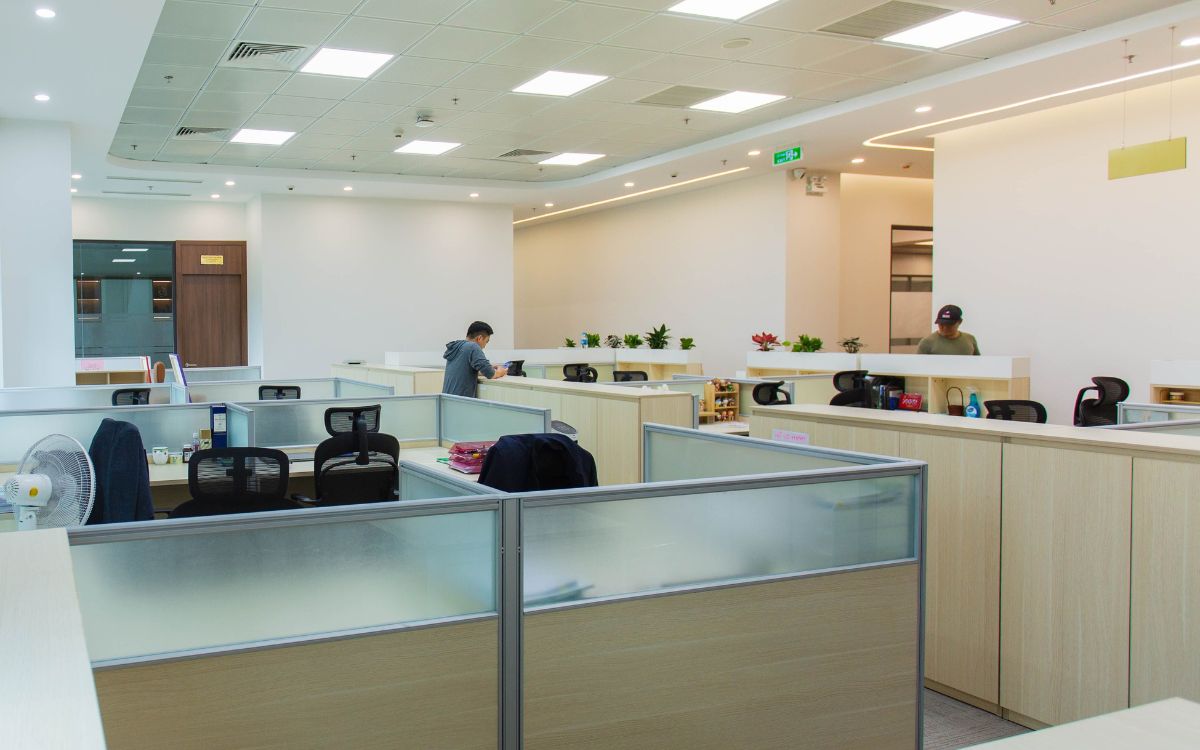
HCL lighting for workplace wellbeing has its greatest adoption in intensive offices. Circadian LED office lighting improves alertness in the morning and maintains concentration levels throughout the working day. Human Centric Lighting in the office reduces visual comfort complaints in internal workplace climate surveys.
Educational centres and classrooms
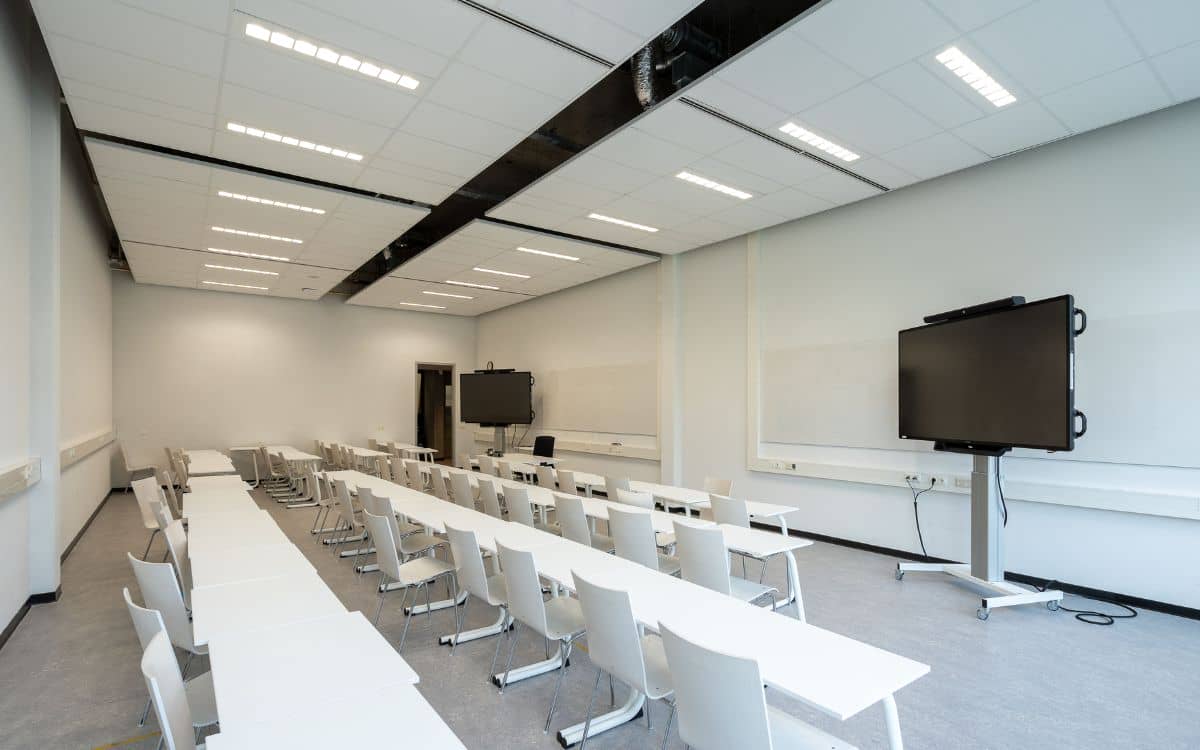
In classrooms, LED lighting for worker wellbeing applies equally to students. An HCL system adjusts the CCT and luminous intensity according to the type of activity. Energy efficiency is maintained because low daytime light levels consume less power.
Hospitals, clinics and care homes
In care homes for the elderly, hospital wards and rehabilitation centres, occupants spend many hours without sufficient natural light. A system that modulates dynamic colour temperature and luminous intensity improves the sleep and wakefulness cycles of patients and residents.
Frequently asked questions about Human Centric Lighting
What is the difference between variable CCT lighting and Human Centric Lighting?
Variable CCT is the technical capability to change colour temperature. Human Centric Lighting adds a circadian control logic: a schedule that adjusts CCT and luminous intensity according to the time of day and the activity. Without that automation, a variable CCT luminaire does not implement HCL.
Is installing an HCL system very expensive?
It depends on the size and the protocol. With DALI, the additional cost is real but recoverable. With wireless control, the Human Centric Lighting installation price is more moderate. The return is assessed in terms of productivity, wellbeing and certification value.
Which LED products are compatible with Human Centric Lighting?
The main ones are the dynamic CCT LED downlight and the dimmable colour temperature LED panel, available with a DALI driver or 1-10V output. Tunable white lighting in linear format is also compatible.
Does Human Centric Lighting require a special electrical installation?
Not necessarily. With existing DALI wiring, integration is straightforward. Without it, HCL can be implemented with wireless luminaires without modifying the wiring.
Are there certifications or regulations on HCL in the United Kingdom?
There is no HCL-specific regulation in the United Kingdom. The WELL building lighting standard is the most widely adopted international reference. WELL includes requirements on circadian lighting and melanopsin blue light control that correspond to the principles of Human Centric Lighting.
Can HCL be applied during a refurbishment without changing the entire installation?
Yes. Replacing existing luminaires with tunable white models with wireless control allows HCL to be implemented without touching the wiring. The control system manages the circadian curve from a central controller. This option allows the installation to be expanded in phases.
If you have a project where user wellbeing forms part of the design criteria, contact us. At Icilux we offer downlights and LED panels with dynamic CCT compatible with DALI and 1-10V dimming systems. We will help you define the right solution for your space.
Leave a comment