Choosing between DALI, 0-10V and Triac LED dimming is a technical decision with concrete consequences. A specification error can cause flickering, incompatibilities with drivers or an installation overcost nobody had anticipated. It can also make it impossible to integrate the lighting system with the building's BMS. This guide compares the three control systems so the decision is technical, not made out of habit.
Why dimming light intensity is essential today
Dimming is no longer an extra in professional projects. It is a functional and economic requirement in any building that aspires to smart management of its energy resources.
Real energy savings with intelligent dimming
A dimmable lighting system allows light intensity to be controlled according to occupancy. Consumption is reduced by between 30% and 60% compared with a fixed installation. Energy savings do not come from changing the LED luminaires: they come from the lighting system adapting the flux to what the space needs. Without dimming, LED luminaires run at 100% even when the space is half empty.
Visual comfort and adaptation to how the space is used
Light intensity affects visual comfort and people's performance. A meeting room needs different lighting for a presentation than for a video conference. A hotel needs a different colour temperature and intensity in the lobby at 8am and at 10pm. Dimming makes that adaptation possible without changing any physical component.

Triac dimming: the simplest option for residential use
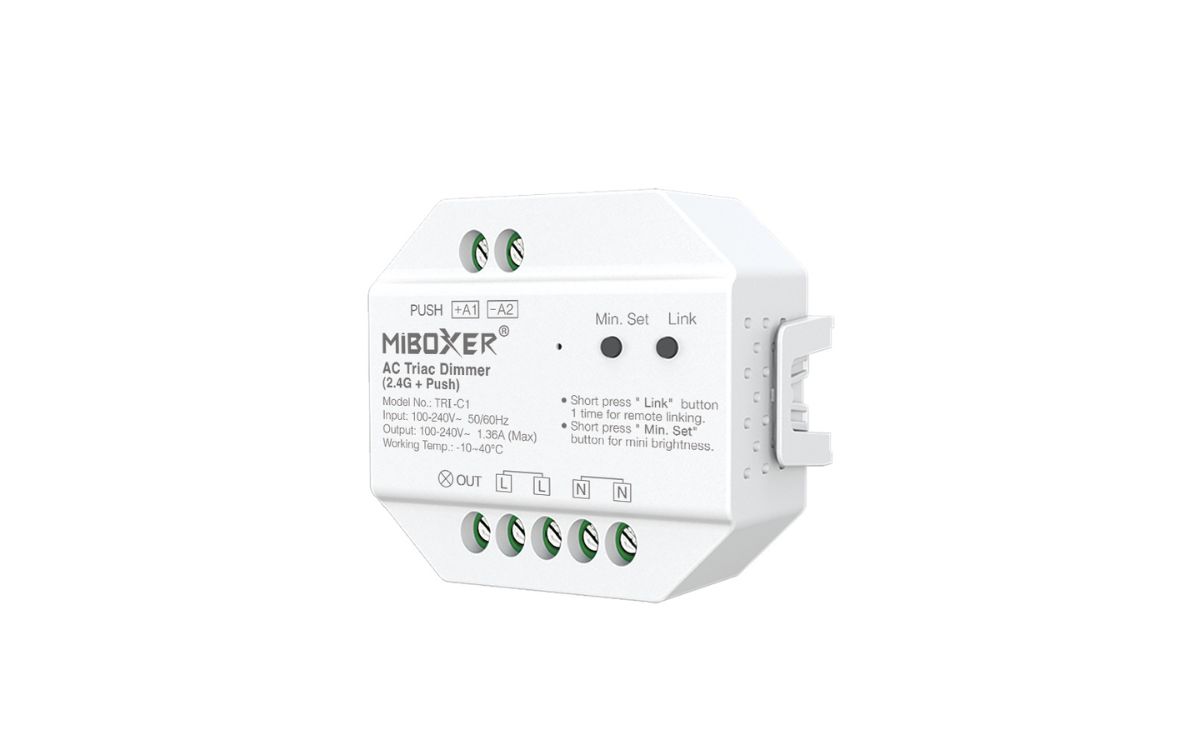
Triac is the most widespread system in residential installations. The phase-cut Triac dimmer cuts the AC voltage waveform to reduce the power delivered to the LED lamp. The 220V Triac LED dimmer price is the lowest of the three systems and its installation requires no additional wiring.
How Triac works and which luminaires it is compatible with
The phase-cut Triac dimmer acts on the 230V AC mains voltage. For the system to work correctly, the connected LED lamp or luminaire must be compatible with phase-cut dimming.
Dimmable luminaire compatibility with Triac depends on the internal driver. A driver not designed to work with a cut voltage produces dimming flicker, buzzing or premature shutdown. The Triac dimmer for LED bulbs only works without problems when the manufacturer expressly declares that compatibility. Flicker-free LED dimming with Triac is only guaranteed with luminaires approved for this protocol.
Advantages and disadvantages of Triac in LED installations
The Triac-dimmable compatible LED bulb is the lowest-cost, simplest solution. It needs no communication bus or special driver and works with existing wiring.
Its limitations are three. The theoretical 0 to 100 percent dimming range is in practice reduced to a range of 10% to 100%.
Dimming flicker is a constant risk with unapproved luminaires. And it does not allow independent switching on/off by zone or integration with building management systems.
0-10V dimming: the standard in professional installations
The 0-10V analogue signal is the benchmark system in medium-sized professional installations. The luminaire's driver receives a direct voltage signal between 0 and 10 volts that determines the flux level. The control system's power supply generates that signal and distributes it via wiring independent of the power wiring.
Analogue signal and how it integrates with the driver
The 0-10V analogue signal reaches the LED luminaire's driver via two additional control wires. The driver interprets that value and adjusts the current to the LED chip.
Digital signal PWM dimming is another variant where the driver receives a digital pulse-width modulation signal. Both variants allow a clean 0 to 100 percent dimming range with no perceptible dimming flicker. The 0-10V to DALI converter allows existing 0-10V installations to migrate to DALI without changing the drivers.
When to choose 0-10V for offices and commercial spaces
0-10V dimming for office LED panels is the most common application. LED panels dimmable by zone with presence sensors cover most energy efficiency requirements without the complexity of DALI. The 0-10V-based smart LED dimming system is the usual choice for LED dimming in hotels. In these environments, control is carried out from central management systems with no need for individual addressing.

DALI: the intelligent protocol for advanced buildings
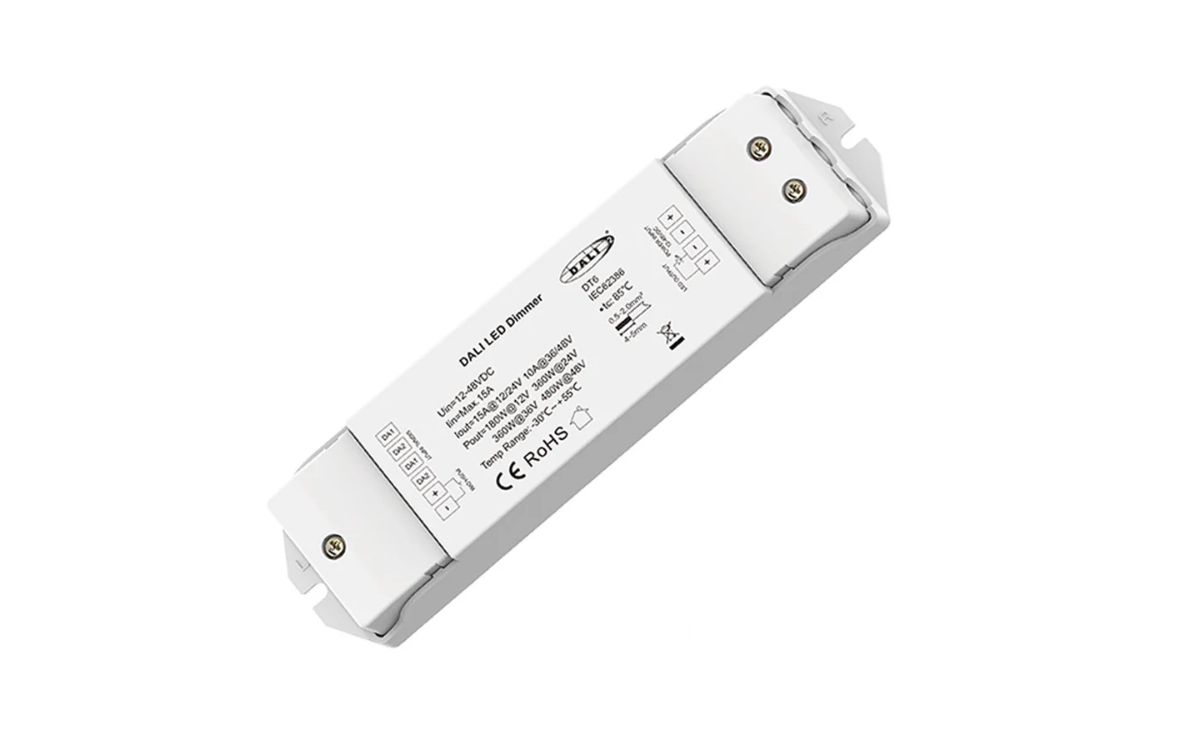
The individually-addressed DALI protocol is the most advanced of the three systems. Unlike Triac and 0-10V, the DALI protocol for building LED dimming is a bidirectional digital communication bus. It allows each luminaire to be identified, addressed and controlled independently. A DALI bus installation supports up to 64 devices per line.
Individual addressing of luminaires and zones
The individually-addressed DALI protocol allows each luminaire to be assigned a unique address on the bus. The system can switch on, switch off and dim each light point independently. It also creates programmed scenes and queries the status of each luminaire in real time. LED dimming for smart buildings and DALI LED dimming for offices benefit from this capability without needing to rewire circuits.
Integration with BMS and home automation systems
A smart building BMS needs all its subsystems to be integrated. The DALI protocol for building LED dimming integrates with the main management systems via compatible gateways. That integration allows the lighting system to respond to events from other subsystems.
Access control, the audio system and the climate control system can automatically trigger lighting changes. Detected presence, programmed scenes or occupancy data are the events that trigger it. The LED dimmer in a smart building does not work in isolation: it is part of the intelligent management of the whole.
Why DALI is the choice for whole-building projects
LED dimming for large smart buildings has no alternative to DALI. The DALI system allows hundreds of LED luminaires to be controlled from a single platform. Scheduled switching on and off by zone and real-time fault diagnosis are managed from the same point.
The question of when to use 0-10V versus DALI is decided based on the size of the project and the level of integration required. Below 64 points with no individual management requirement, 0-10V is sufficient. Above that, or with a smart building BMS requirement, DALI is the only correct option.
Direct comparison of the three systems
The difference between DALI, 0-10V and Triac LED dimming is not just about price or protocol. It is a difference in real capabilities in installation, control and integration.
| Parameter |
Triac |
0-10V |
DALI |
| Installation cost per system |
Low |
Medium |
High |
| Technical complexity |
Low |
Medium |
High |
| Real 0 to 100 percent dimming range |
10-100% |
1-100% |
0.1-100% |
| Dimming flicker risk |
High |
Low |
None |
| Individual addressing |
No |
No |
Yes |
| Smart building BMS integration |
No |
Limited |
Yes |
| Dimmable luminaire compatibility |
Selective |
High |
Requires DALI driver |
| Protocol |
phase-cut Triac dimmer |
0-10V analogue signal |
individually-addressed DALI protocol |
Installation cost per system
Installation cost per system varies significantly. Triac uses existing wiring and has the lowest 220V Triac LED dimmer price. 0-10V requires additional control wiring and compatible drivers. DALI adds the cost of the DALI bus installation, DALI drivers and management software.
Technical complexity and learning curve
Triac requires no specific training. 0-10V requires understanding control wiring and driver compatibility. DALI requires training in the protocol, address configuration and use of the management software. The universal DALI-compatible LED dimmer covers most applications once the protocol is mastered.
Compatibility with existing luminaires
Triac works with luminaires that declare compatibility with phase-cut dimming. 0-10V works with any driver with a 0-10V analogue signal input. DALI requires a driver with a certified DALI interface.
The 0-10V to DALI converter extends compatibility in upgrade projects. The wide range of available dimmable drivers covers all three protocols across most families of professional LED luminaires.

When to choose each system depending on the type of project
The question of which LED dimming system to choose depends on three variables: project size, level of integration required and budget. Residential and small commercial: Triac dimmer for LED bulbs or dimmable LED lamp with compatible dimmer. Offices and medium-sized commercial spaces: 0-10V dimming for office LED panels with zone control. Office buildings, hotels and large installations: DALI protocol for building LED dimming with smart building BMS integration and complete intelligent management.
Frequently asked questions about LED dimming systems
Are all LED bulbs compatible with Triac dimmers?
No. Only LED lamps that declare compatibility with phase-cut dimming work correctly. Using a phase-cut Triac dimmer with an incompatible luminaire causes dimming flicker, buzzing or erratic behaviour below certain intensity levels.
What is the practical difference between 0-10V and DALI in an office?
With 0-10V, all drivers on the same circuit receive the same signal and dim to the same level. With DALI, each luminaire has its own individually-addressed DALI protocol and can be dimmed independently. In an office with differentiated zones, DALI adjusts the light intensity at each workstation without affecting the rest.
Can I combine DALI and 0-10V in the same installation?
Yes, using the 0-10V to DALI converter. This device converts the 0-10V analogue signal into DALI commands for compatible drivers. It is the solution for upgrade projects where part of the installation is 0-10V and you want to extend it with DALI zones without changing the main controller.
Does a Triac dimmer cause flickering in LED luminaires?
It can if the luminaire is not compatible. Dimming flicker with Triac occurs when the LED lamp's internal driver is not designed to work with a cut voltage. The solution is to use the Triac dimmer for LED bulbs only with luminaires that declare that compatibility.
What driver does a luminaire need to be compatible with DALI?
It needs a driver with a certified DALI interface according to the IEC 62386 standard. That driver incorporates a receiver for the individually-addressed DALI protocol, allowing it to switch on/off and receive digital commands from the bus. A driver with a 0-10V analogue signal input is not compatible with a DALI bus installation without a converter.
Can I convert a 0-10V installation to DALI without changing the drivers?
Yes, using the 0-10V to DALI converter. This device acts as a gateway between the new controller's DALI bus and the existing 0-10V drivers. It allows light intensity to be controlled via commands from the DALI system without replacing the drivers. It is the most efficient option for upgrading existing installations without additional building work.
Leave a comment